The European TREASURE project is investigating how plastic waste entering the North Sea through rivers and inland waters can be better detected and removed. Various solutions are being tested in five living labs around the North Sea. The Belgian living lab in Nieuwpoort focuses specifically on the waterway system around the Ganzepoot.
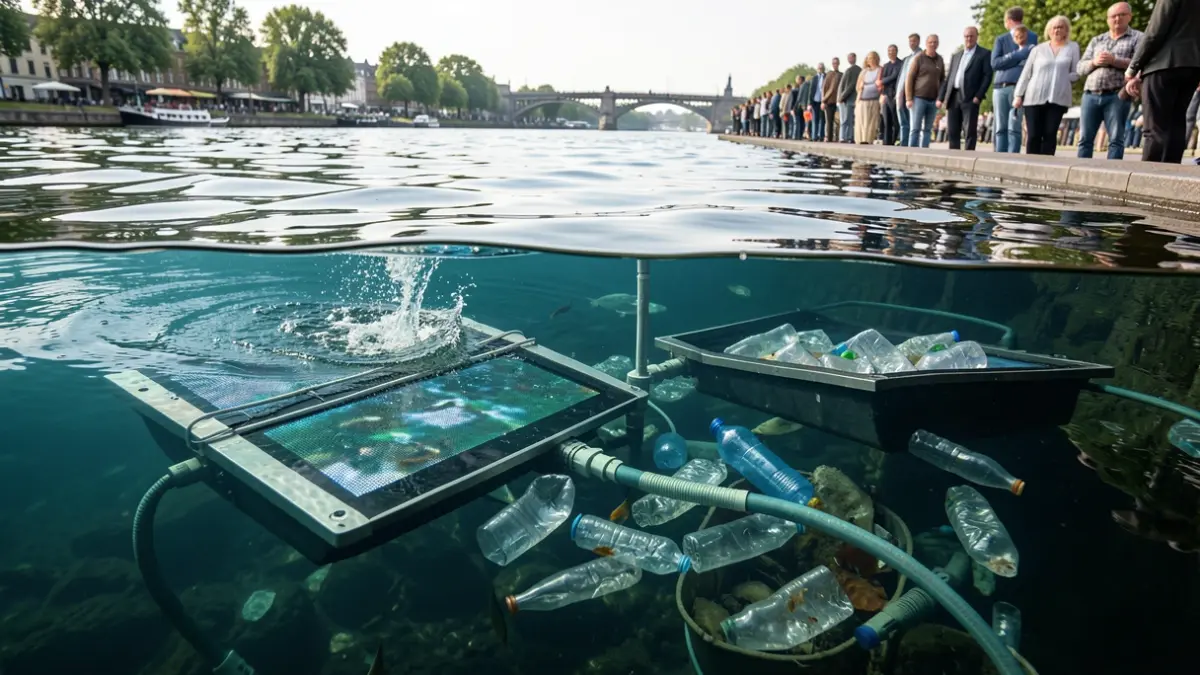
One of the solutions being tested is MARC (Marine River Cleaner), a system developed by IMDC, Multi.engineering, and Herbosch-Kiere. The system was demonstrated on October 23rd during the final stakeholder meeting of TREASURE.
MARC uses a bubble screen on the riverbed to guide floating plastic to a collection point, capturing waste before it flows into the North Sea via the Ganzepoot. Because the system operates below the water surface, shipping remains unimpeded and fish can pass safely.
Despite the arrival of storm Austen, the demonstration was able to proceed during a brief calmer moment. MARC will be intensively tested and further optimized over the next six weeks.
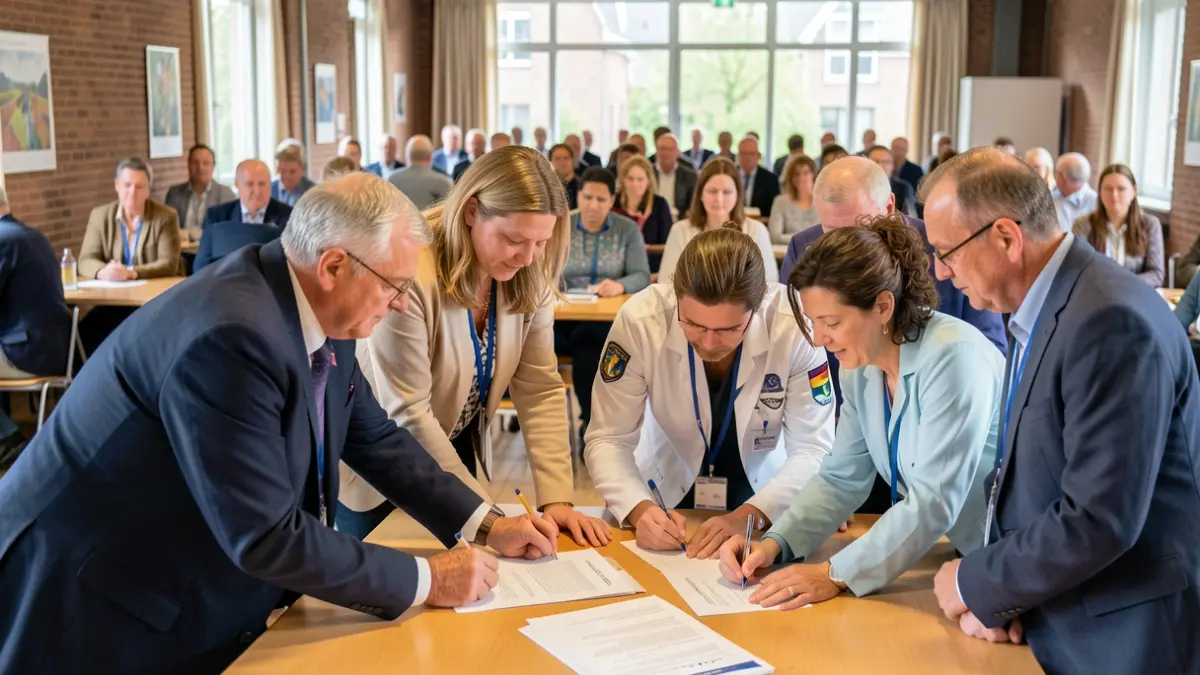
During the final meeting, the main insights from Living Lab Nieuwpoort were also presented. Researchers mapped out, among other things, the origin of the litter, how plastic moves through the local water system, and how residents and tourists view the problem. The needs of water managers and policymakers were also addressed.
The results help to better understand where and how plastic pollution can be tackled. At the same time, the meeting provided an opportunity to discuss the necessary next steps with the involved parties.
The development of MARC is not an isolated effort. TREASURE builds on insights from projects like PLUXIN, which investigated the amount of plastic flowing into the North Sea via the Scheldt, and DeMARC, where the concept of the Marine River Cleaner was further developed. TREASURE continues this by testing and optimizing MARC in practice in Nieuwpoort.