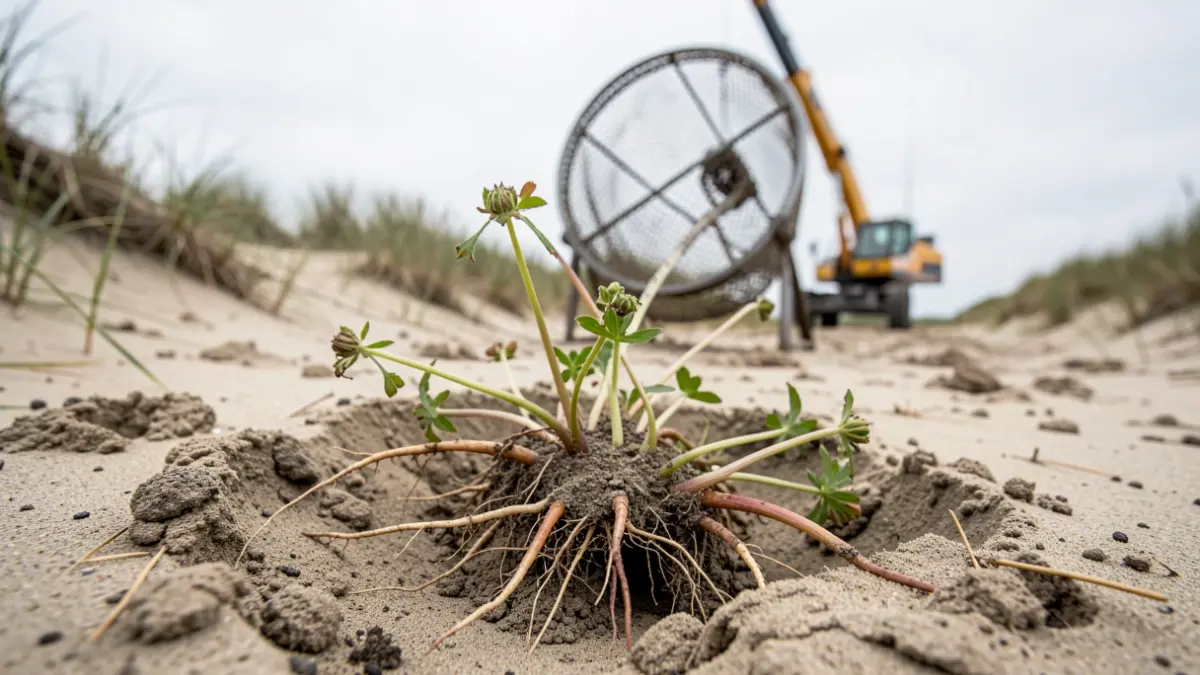
In the dunes of De Haan, including Prins Albertpark and the Duinbossen, invasive plants like rugosa rose and boxthorn are being addressed. These species spread rapidly, displacing native plants and consequently reducing space for animals dependent on the original vegetation. The LIFE DUNIAS project is undertaking significant work to remove these plants and restore the natural habitat.
The operations involve excavating and sieving sand to a depth of approximately one meter, after which the sand is reused to restore the dunes to their original form. The removed invasive plants and their roots are transported and processed into compost. Following these works, natural vegetation will be able to re-establish itself.
Temporary disruptions and closures may occur during the works. In Prins Albertpark, some walking paths might be temporarily closed. In the Duinbossen, walking, riding, and MTB trails may be inaccessible due to construction traffic.
The main works are scheduled to last until March 2027. In the summer of 2027, some smaller mowing operations will take place, potentially causing minor disruptions. The Agency for Nature and Forest urges the public to respect the signage and avoid entering work zones to ensure safety and efficient progress.