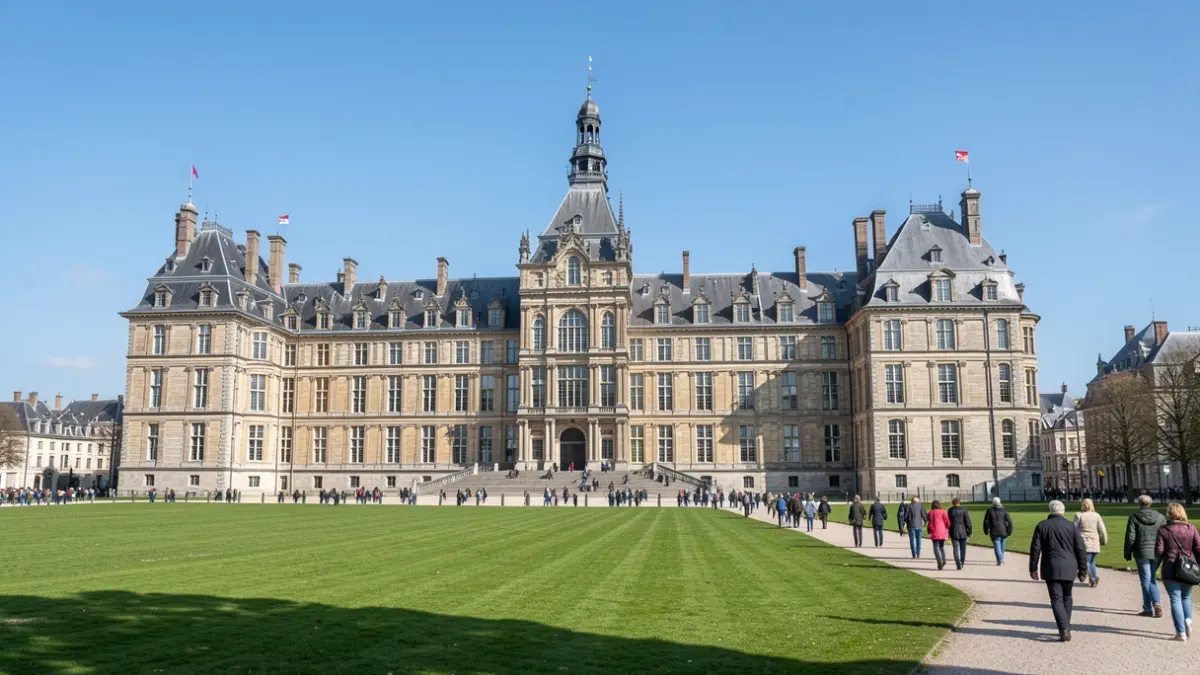
The Citadel of Diest, one of the city's most recognizable heritage sites, is undergoing a transformation into an accessible urban district. Erfgoedstichting Vlaams-Brabant (ERF) and the city of Diest are collaborating on plans that will accommodate culture, entrepreneurship, social interaction, and green spaces, including residential units and conference and accommodation facilities.
Bart Nevens, deputy for heritage and chairman of ERF, highlighted the recognition for the Citadel and the work of the city and ERF. "The ambition is very concrete: to preserve the unique character of this fortress while giving more people the opportunity to enjoy it," Nevens stated. Historic buildings will regain a function, roofs will become accessible green spaces, and old passages will reconnect the Citadel with the city.
The second phase of restoration focuses on the western fortress buildings, addressing moisture problems in historic roof structures to prevent further damage to the masonry. The artillery tower will also be restored, along with the partially filled dry moat and historical connections. The site will receive €4.91 million in Flemish support for this phase.
A notable feature will be the expansion of the roof park, adding approximately 6,700 m² of additional public green space atop the historic buildings. This, combined with new walking connections, aims to make the Citadel more accessible and attractive to residents and visitors.
Jeroen Overmeer, Diest's alderman for heritage, noted the Citadel's special place in the city and how this repurposing will give it a greater role in the daily lives of Diest's residents. The Flemish selection supports the direction taken with ERF, working step-by-step towards a place where people enjoy walking, working, experiencing culture, and meeting each other.
The first phase of restoration, which already includes a tourist reception point, the Pegasus Museum, an experience café, and accommodation for the Hageland Academy for Visual Arts, is already bringing new activity to the site. Entrepreneurs and associations also contribute to this.
ERF is guiding the city of Diest in the restoration, repurposing, and securing of heritage funds. Flemish grants are combined with municipal funds and private investments. The city of Diest retains control over the development.
Bart Nevens concluded that a project of this scale requires knowledge, resources, and a multi-year approach. ERF's added value lies in building a strong dossier with the city and making the restoration possible step by step, moving closer to a Citadel that preserves its history and is fully integrated into life in Diest.