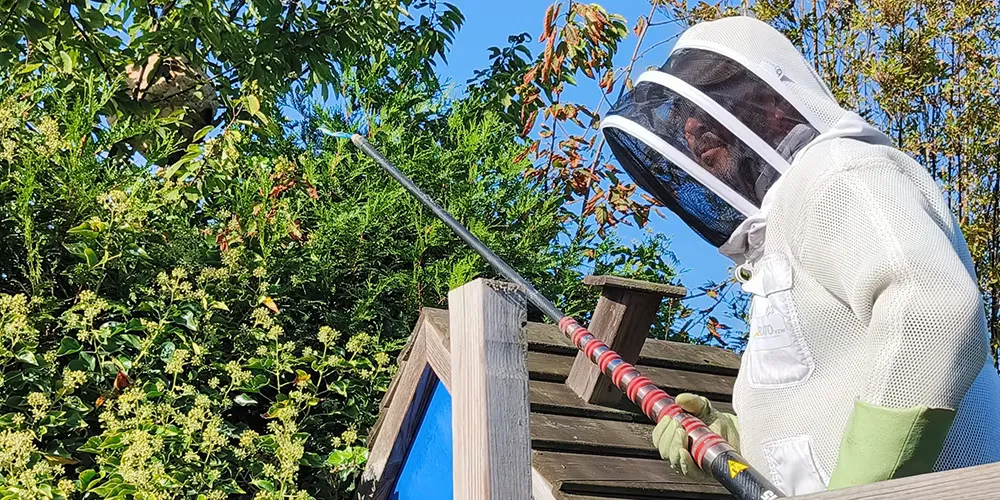
A total of 3,692 reports were processed during the control season, which ran from May 1 to October 16. Thanks to an improved reporting platform from Vespa-Watch, there were significantly fewer duplicate reports than in 2025. Citizens could easily track reported and treated nests via the interactive map at app.vespawatch.be.
Joop Verzele, chairman of RATO vzw, highlighted the efforts to treat nests without pesticides: "This year, we worked extra hard to treat more nests without poison. Thanks to the perseverance of the field staff, we can proudly say that 58% of the nests were treated without poison!" Early season nests were removed and frozen, while larger nests were treated with diatomaceous earth, a natural product.
For the first time since the species was identified in Flanders, the population has decreased. This is attributed to unfavorable weather conditions for both the Asian hornet and wasps in general. The management plan in East Flanders focuses on damage limitation and efficient use of resources.
Deputy Joke Schauvliege, responsible for Agriculture & Rural Affairs, stated: "In East Flanders, we strongly believe that coordinated management is cost-effective management. That's the difference we can make as a supra-local level. Therefore, the Province has been strongly supporting the management of the Asian hornet for several years. Every resident of East Flanders could benefit from free control during the period of most nuisance, between early May and mid-October."
Early spring intervention remains crucial for the safe, pesticide-free removal of nests and to minimize nuisance. The earlier a nest is tackled in the season, the less trouble it causes for people, bees, and nature. Prompt action prevents most damage. In autumn, queens leave their nests to overwinter, and the remaining hornets die. The nests built high in trees are less dangerous to humans, making autumn control less effective, and coordinated efforts cease from mid-October. The Asian hornet builds a new nest each year.
Detailed control results can be viewed on the interactive map at app.vespawatch.be.