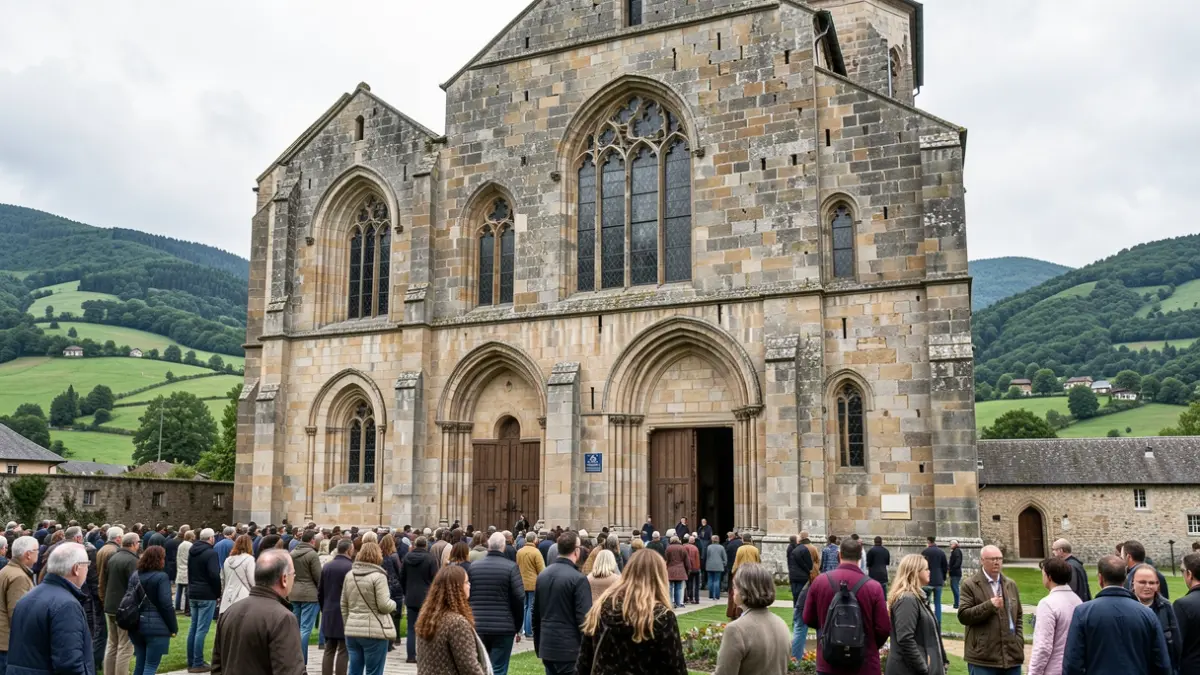
The history of the Abbey of Zoetendale, also known as Dulcis Vallis or “Sweet Valley”, began in 1215. Founded on the border of present-day Maldegem, Middelburg, and Moerkerke, the abbey grew into an influential institution with extensive possessions. The community joined the order of Arrouaise, which emphasized simplicity, prayer, work, and discipline.
Its strategic location in the Zwinstreek, an area of wastelands and marshes, played a crucial role. The abbey contributed to land reclamation, the diking of the coastal plain, and the management of granges. The canons were closely linked to the Lords of Maldegem, a noble family who governed the region from the castle of Reesinghe. By the fourteenth century, the abbey experienced its greatest flourishing, possessing hundreds of hectares of fertile land.
From the sixteenth century onwards, the religious wars brought great unrest. The abbey was severely affected in 1578 and 1579 by the Watergeuzen and Bosgeuzen, leading to destruction and the flight of the canons. Abbot Joris Wittebroot attempted to maintain contact with his dispersed brethren and defend the abbey's interests from a modest residence in Bruges, but prospects for recovery diminished.
On June 23, 1584, Pope Gregory XIII officially decided to dissolve the abbey, a decision later confirmed that same year by King Philip II of Spain. The possessions were transferred to the Jesuit college in Bruges. The remaining canons were provided with a lifelong allowance, but the monastic community itself ceased to exist.
The story took a dramatic and enigmatic turn on October 4, 1584, when fishermen found the body of abbot Joris Wittebroot in the Damse Vaart. The circumstances of his death – whether an accident, suicide out of despair over the loss of his abbey, or something else – were never clarified. Wittebroot, the twenty-fifth and last abbot, was buried in the abbey church of Eekhoutte in Bruges.
With his death, the final chapter closed on an abbey that had shaped the religious and economic life of the region for nearly three and a half centuries. Today, only traces remain in the landscape and the memory of the former abbey site, marking a remarkable piece of Maldegem's history.