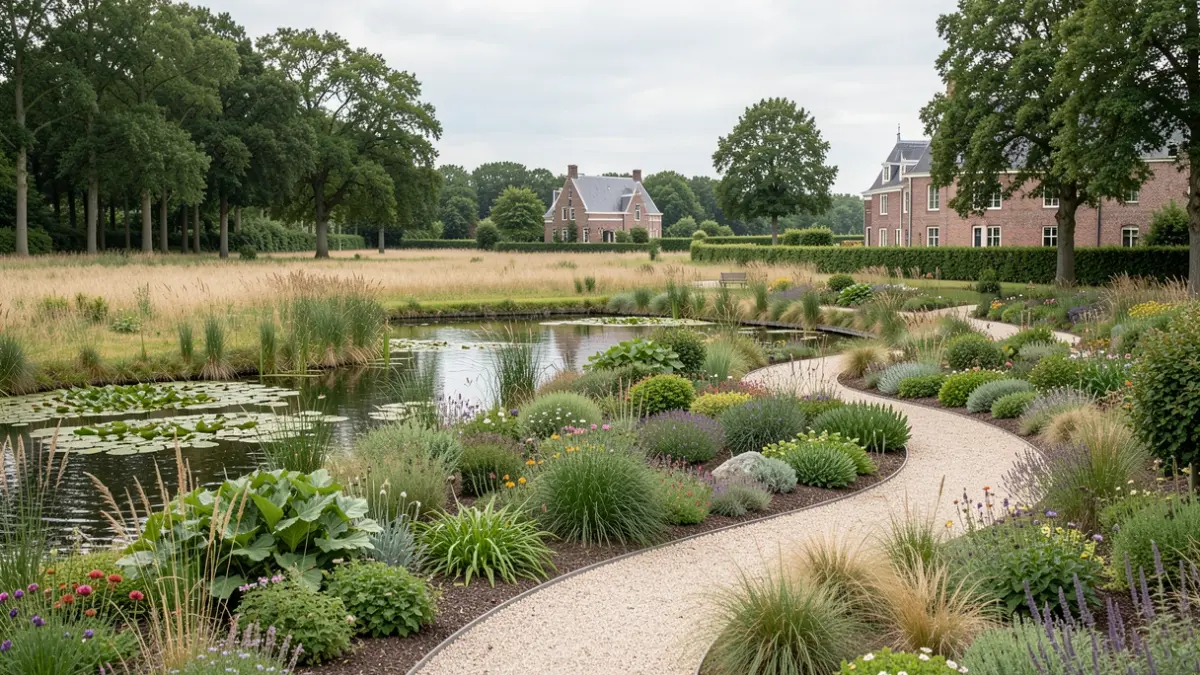
Landscape architect Pieter Daenen from BuroLandschap, in collaboration with Evolta, has designed a garden reflecting Limburg's natural environment. The garden integrates elements of water, fields, forests, dunes, and gardens, featuring walking paths that connect visitors, including those with reduced mobility, to the surrounding landscape and the Duinengordel.
The redevelopment also restores the historical appearance of the Commanderij. The high earthen rampart at the rear will be removed to improve the visibility of the buildings, and the historic moat will be excavated to its original form. Attention is paid to valuable trees and biodiversity, with felled trees being repurposed into natural play and seating elements.
The transformed castle garden will serve as a multifunctional meeting place, connected to the renovated courtyard of the castle farm. It will offer additional outdoor space for local associations and, along with the restored farm and future tourist reception, will create a hub where heritage, nature, and social interaction converge.
This outdoor landscaping aims to give the Commanderij the prestige it deserves as a unique heritage site, by combining history, nature, and experience. The project is supported by Toerisme Vlaanderen, the Agentschap Onroerend Erfgoed, Limburg Sterk Merk (LSM), and the Nationaal Park Hoge Kempen.