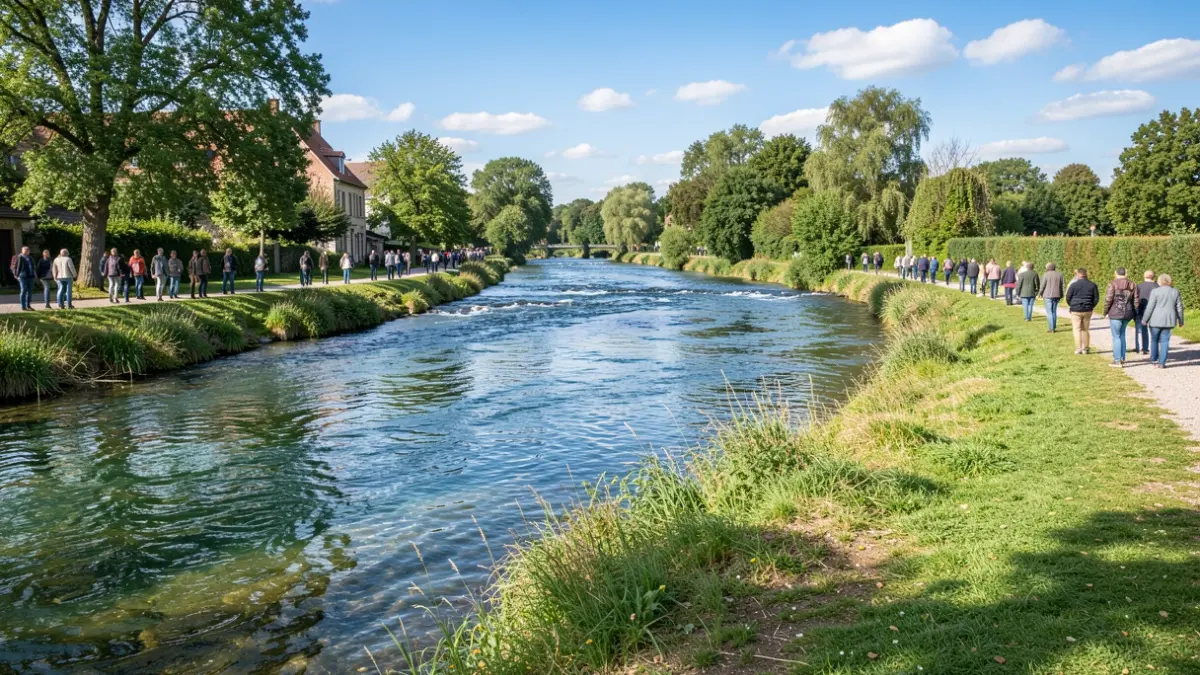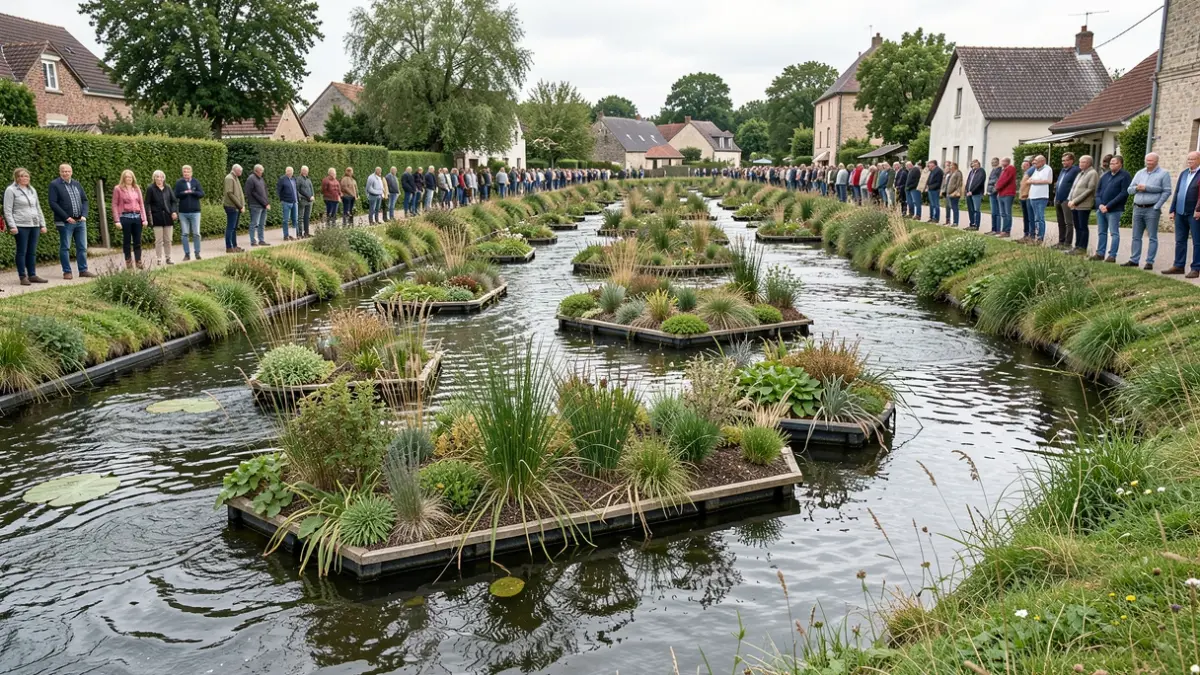
Four floating reed islands, known as Constructed Floating Wetlands, have recently been installed in a sediment trap on the Barebeek. This pilot setup tests five native plant species combined with two different substrate variants. Experimental zones with filtering vegetation are also being established along the banks to identify the most suitable combinations for watercourses.
For several years, researchers will monitor plant growth and root development, as well as PFAS concentrations in sediment, surface water, and groundwater. The results will provide insights into the role of nature-based solutions for improved sediment and water management, and their potential to protect floodplains from sediment and contaminants during extreme rainfall.
This trial is part of the European Interreg NWE project ClimASed, which focuses on climate-resilient solutions for sediment management and water quality. Similar projects on the Dijle and Douvebeek are examining measures to make sediment flows more resilient to climate change effects.