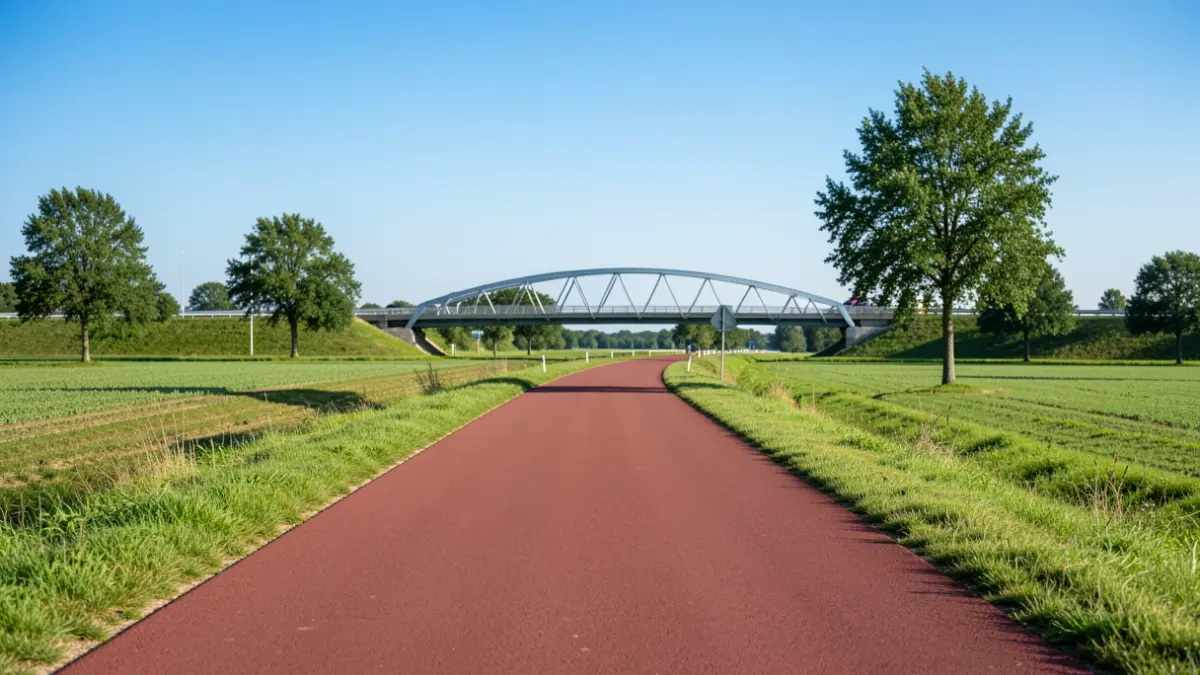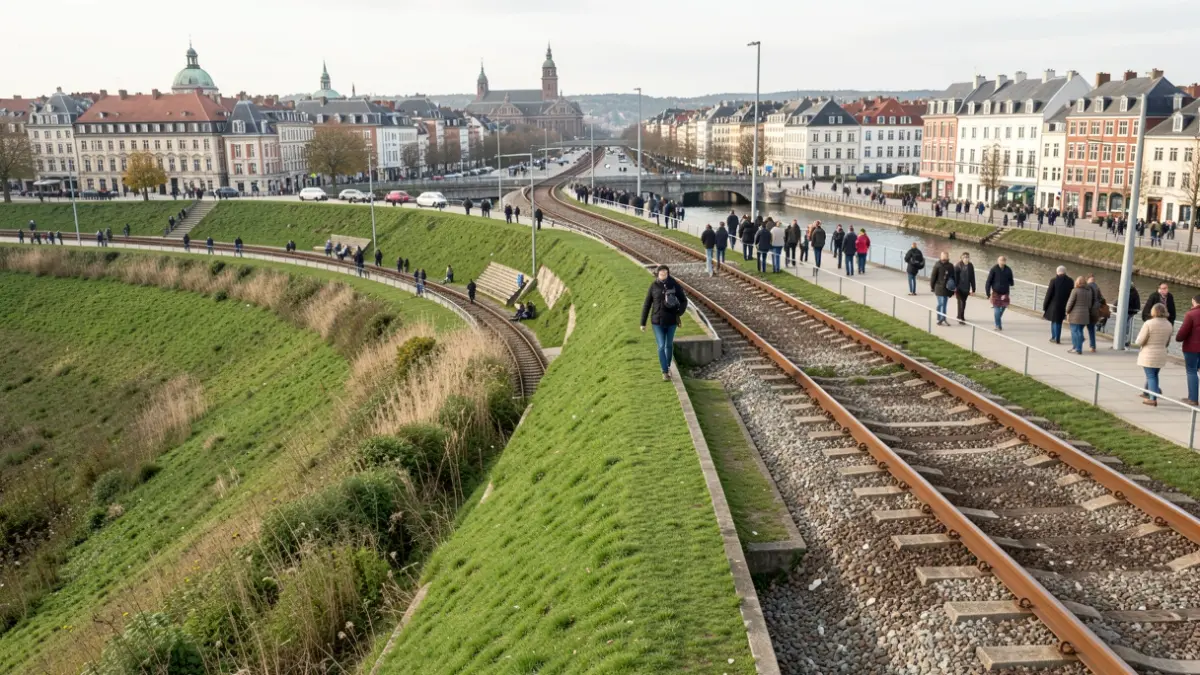
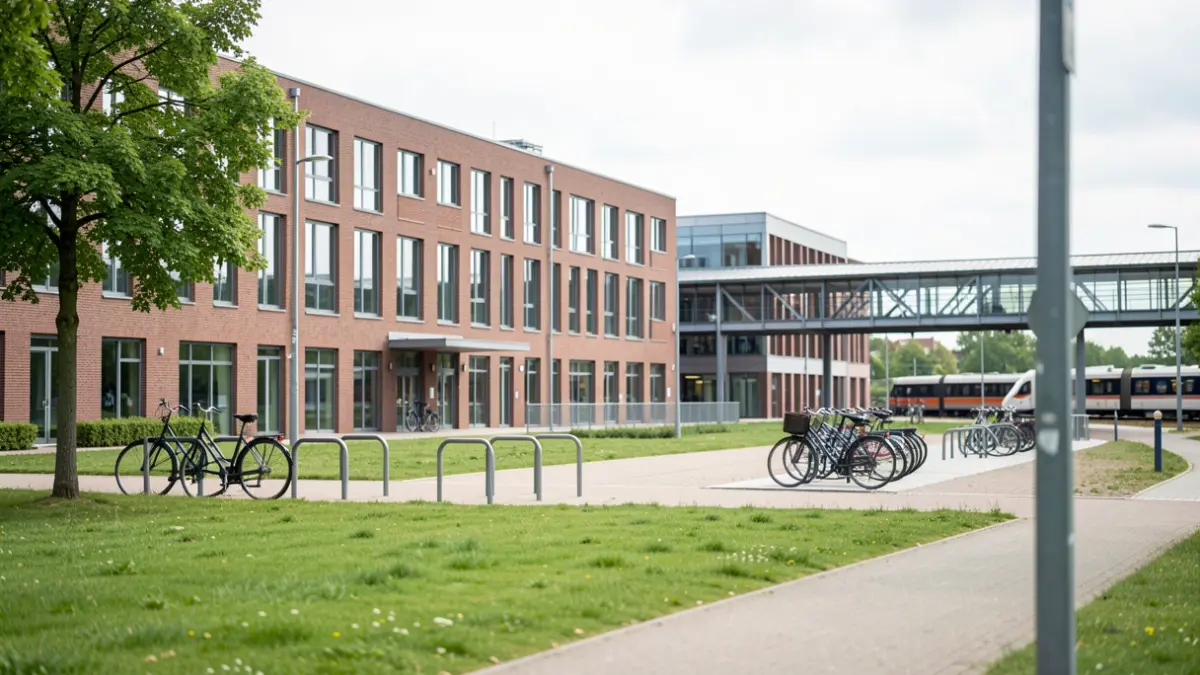
Commuting and travel to school represent a significant carbon footprint for universities of applied sciences. Location choice and campus design are more decisive in this regard than awareness campaigns. Campus Brugge Station is strategically situated next to the Brugge station, reinforcing the focus on sustainable mobility and encouraging students and staff to use the train, bicycle, or walk as much as possible.
Within the campus boundaries, the hierarchy is reversed: the design provides for smooth circulation and an engaging outdoor space for pedestrians, as bicycles and cars are kept at the campus edges. Consequently, car traffic no longer reaches the heart of the campus.
The train is the fastest and cleanest option for many students, as Campus Brugge Station is adjacent to the railway line. Bicycles are parked at the campus edges, and through Stuvo, students in Kortrijk can also rent a bicycle. The outdoor space is designed around pedestrians, with continuous circulation between buildings.
Stuvo, the student services department, supports students from Howest and UGent Campus Kortrijk with services such as bicycle rental, housing, student jobs, and psychosocial support, making the sustainable choice also the practical choice. Sustainable mobility is one of the eight pillars of the university college's strategy.