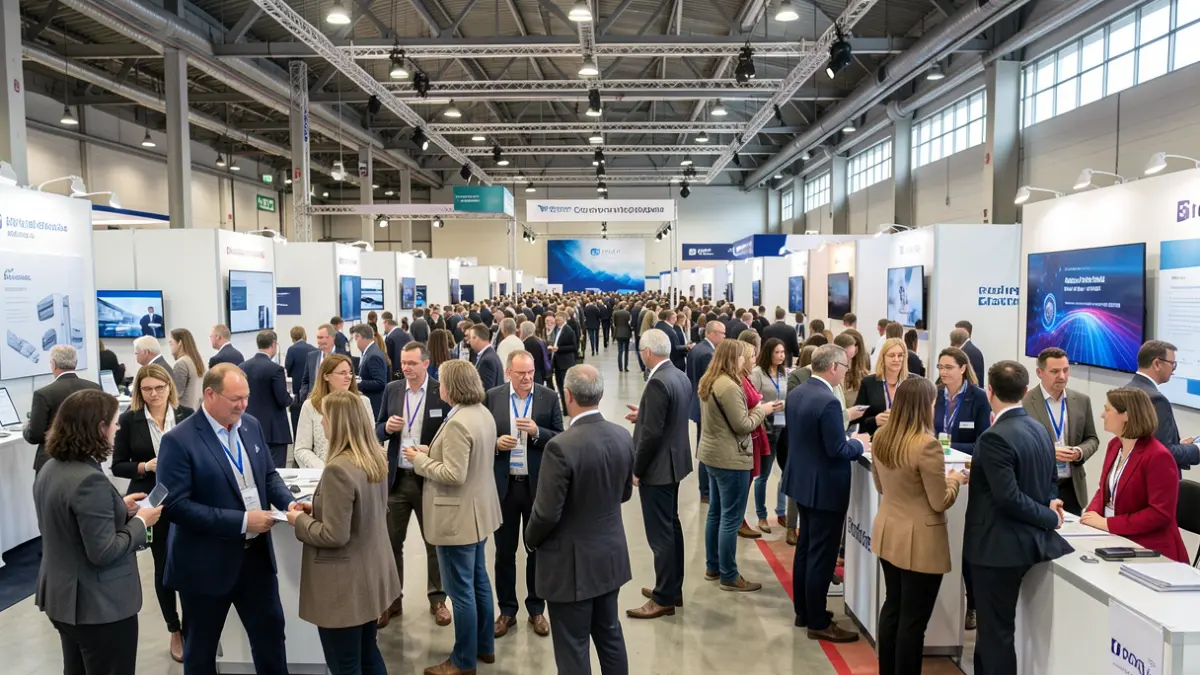
Researchers and companies are increasingly bringing their expertise together to develop new knowledge, technologies, and ideas. The Blue Economy Science Summit (BESS) stimulates this exchange by linking concrete challenges and market needs with research results. This year's focus was on Blue Carbon, digitalization, and Floating Offshore Wind.
Koen Verhaeghe from VLAIO emphasized that valorization should not be the final step of research but a continuous process. 'During the research, potential applications and users must already be considered,' stated Verhaeghe. Evy De Bruyker from Marifish.Inc highlighted the role of incubation and entrepreneurship, stressing the importance of bringing the right people together, not necessarily the researchers themselves becoming entrepreneurs.
The experiences of Goedele Verreydt with iFLUX and Steven Nauwelaerts demonstrated that there is no single route to valorization. New initiatives like EIT Water and the Belgian Mission Ocean Hub play a role in connecting knowledge institutions and companies.
Parallel sessions delved deeper into Blue Carbon (CO₂ capture in marine ecosystems), digitalization (from data to scalable applications), and Floating Offshore Wind (from demonstration to industry). The central question remained: what is needed to move from knowledge and technology to concrete applications and impact?
Regarding Blue Carbon, discussions focused on improved monitoring, CO₂ storage, and the influence of offshore activities. The challenge extends beyond research alone; societal added value and economic feasibility require early involvement from companies, land managers, and governments.
The session on digitalization, featuring cases from Ghent University, Amplifino, and Seafar, underscored the importance of scalability from the outset and the need for discoverable, reliable, and secure open data. The key takeaway: start with the problem to be solved, not with the data itself.
For Floating Offshore Wind, which is more advanced, the challenge lies in scaling up to commercial wind farms. This requires not only technological progress but also standardization, serial production, logistics, and suitable infrastructure. Flanders sees opportunities in the international market due to its expertise in engineering and maritime activities.
Despite the differences between the themes, a clear common thread emerged: impact requires early consideration of the market, financing, infrastructure, and partners. BESS aims to bring these perspectives together, connecting researchers, companies, and entrepreneurs, as valorization begins much earlier than the end of a research project.
The Blue Economy Science Summit (BESS) is an initiative by the Flanders Marine Institute (VLIZ) and De Blauwe Cluster, aimed at strengthening the exchange between research and business within the blue economy.