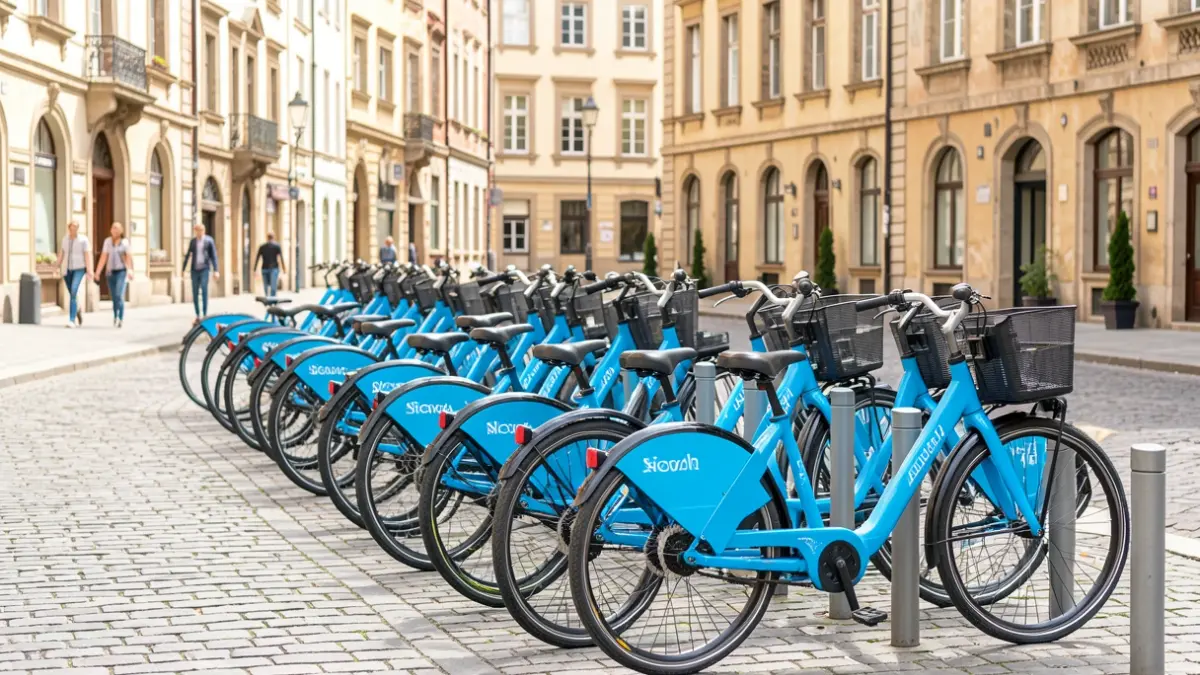
Following the full rollout, shared bikes will be available at 30 locations across the city center and its sub-municipalities. This initiative aims to strengthen cycling as a mode of transport and improve accessibility. The new locations are situated near community facilities, sports and recreational sites, and stations, complementing the existing network and enhancing connectivity.
Thanks to electric assistance, the bikes are suitable for longer distances and can be used for commuting or extending public transport journeys. The Hoppy shared bikes are also available within the Brugge Transport Region, enabling travel beyond municipal borders.
The bikes operate on a 'back-to-many' principle, allowing users to pick up a bike at one designated location and return it to another within the network. This offers increased flexibility, for example, for travel from a peripheral parking lot to the center or from a station to a destination in a sub-municipality. A ride costs €0.50 per half hour.
The expansion includes 20 specific locations: Assebroek Peerdeke, Sint-Kruis Gulden Kamer, Assebroek Sport Vlaanderen, Dudzele sportzaal De Polder, Lissewege station, Zwankendamme Kerk, Kruisabele, Zeebrugge Station Strand, Sint-Jozef Kerk, Sint-Andries Magdalenazaal, Sint-Michiels Rijselstraat, Sint-Andries AC, Kinepolis, VIVES Xaverianen, BMCC, Sint-Jakobsplein, Park, Kartuizerkerk, Ezelpoort, and Komvest. Together, these add 104 additional electric shared bikes.
The initial phases of this project were financed through the 'Transport on Demand' budget. For this next phase, Bruges City is investing its own funds through the purchasing center of the regional intermunicipal organization WVI.