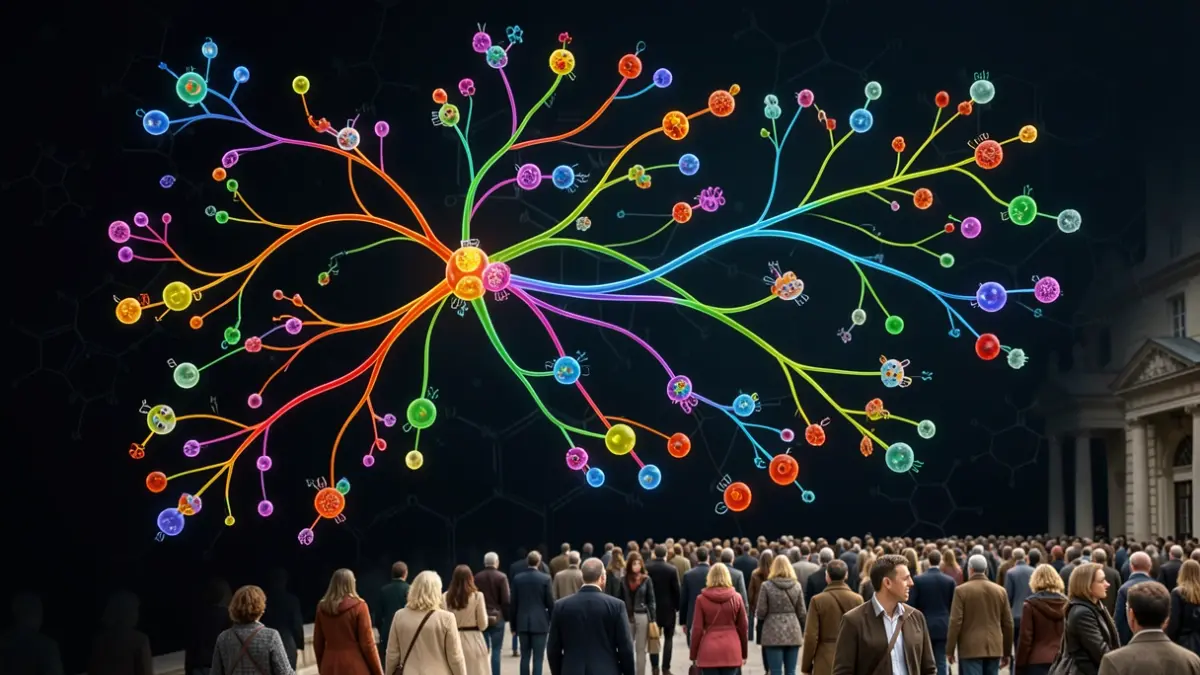
These tissue-resident macrophages are long-lived immune cells vital for maintaining the health of specific organs. In the brain, they include microglia and border-associated macrophages, while organs like the liver, heart, and kidney possess their own unique macrophage populations. These cells originate very early in embryonic development, with early precursors forming in the yolk sac, a temporary structure supporting the embryo.
Tracing the human origins of these cells was previously challenging due to limited access to embryonic tissue. A team led by Prof. Renzo Mancuso (VIB-UAntwerp Center for Molecular Neurology) and Prof. Bart De Strooper (VIB-KU Leuven Center for Neuroscience & UK DRI) circumvented this by recreating this early developmental stage in the lab using human pluripotent stem cells. They generated a population called 'inducible yolk sac myeloid progenitors' (iYSMPs), which molecularly closely resemble progenitors from early human development.
Following transplantation into mouse models, these human iYSMPs successfully colonized various organs and adapted to their local environments. In the brain, they differentiated into microglia and border-associated macrophages, while in the liver, heart, and kidney, they adopted the identity of the macrophages normally found in those tissues. Single-cell analysis confirmed that these transplanted cells activated tissue-specific gene programs closely matching those of human macrophages from the corresponding organs.
"What is exciting here is that we can now generate a human progenitor population that not only resembles the cells seen during early development, but also behaves like them," states Mancuso. "This gives us a way to study, in much greater detail, how these cells develop and how local tissue environments shape their identity."
The researchers found that cultures with more iYSMPs were more successful in establishing themselves post-transplantation compared to cultures with more mature macrophages. This suggests that maintaining the cells in this early progenitor state is crucial for efficiently generating tissue-resident macrophages. The work also holds potential therapeutic implications.
"Being able to generate progenitors that can develop into the right macrophage type in the right tissue could provide a starting point for exploring whether damaged or dysfunctional macrophage populations might one day be replaced," says Mancuso. Prof. De Strooper adds that this could be particularly relevant for neurodegenerative diseases such as Alzheimer's disease or frontotemporal dementia, where microglia and other macrophage populations are increasingly recognized as active contributors to disease biology.
The study, published in Developmental Cell, offers a novel system to investigate the role of these cells in disease and explore potential replacement strategies.