
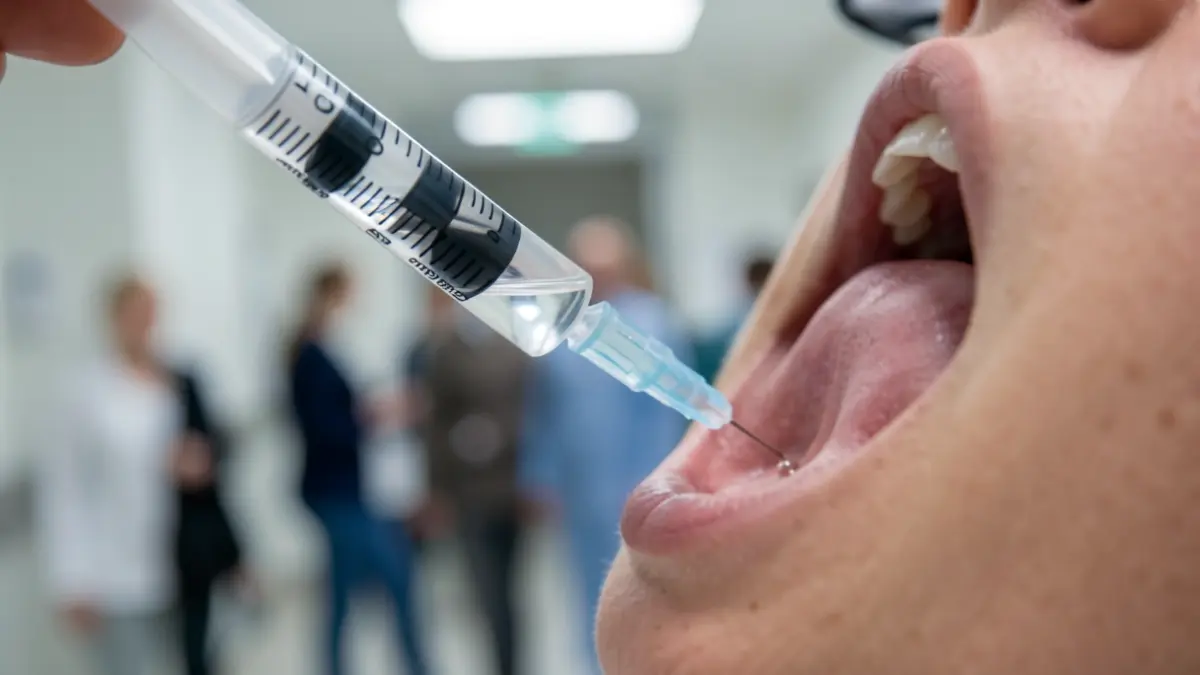
In R-CPD, or retrograde cricopharyngeal dysfunction, swallowing functions normally. The issue arises when air attempts to rise from the stomach: the muscle at the entrance of the esophagus fails to open, trapping the air. This can cause symptoms like bloating, chest or abdominal pain, flatulence, and gurgling sounds in the throat.
Karlien Raymenants, a doctor at UZ Leuven, investigated R-CPD as part of her doctoral research. She highlights the significant impact severe symptoms can have on patients' lives, leading many to avoid carbonated drinks and dining out, and causing discomfort at work due to bloating and gurgling.
“"For people with severe complaints, the impact on their lives can be significant. Many of them do not drink carbonated beverages, and some even avoid going to restaurants."
The condition was first described in 2019. An American ENT doctor identified the issue in a patient unable to burp, who experienced bloating. Suspecting a problem with the esophageal entrance muscle, the doctor treated the patient with a botox injection to relax the muscle. The patient's positive experience shared online led to widespread recognition of the 'no-burp syndrome' on social media platforms like TikTok.
Previous studies on botox treatment had limitations, such as the absence of a placebo group and varying follow-up methods. Dr. Raymenants conducted the first controlled and blinded study involving fifty patients, with half receiving botulinum toxin and the other half a placebo injection.
One week post-treatment, all 25 patients who received botulinum toxin could burp again, compared to one in five in the placebo group. After twelve weeks, 88% of the botox group still showed significant improvement, versus 4% in the placebo group. Remarkably, over half of the patients could still burp a year later, exceeding botulinum toxin's typical four-to-six-month duration. Researchers theorize that patients may relearn the normal burping reflex during the period of muscle relaxation.
Esophageal manometry studies revealed that the esophageal entrance muscle in R-CPD patients does not relax, and sometimes even increases in tension. To better assess symptom severity and impact, researchers developed a questionnaire to help physicians identify patients who might benefit from treatment.
Karlien Raymenants has been nominated for the PhD-cup for her research.