Vlaams-Brabant finalist for World Smart City Awards
The 'Slimme Regio' program receives international recognition at the Smart City Expo World Congress in Barcelona.
By Els Verhaeghe
••5 min read
Provincie Vlaams-Brabant
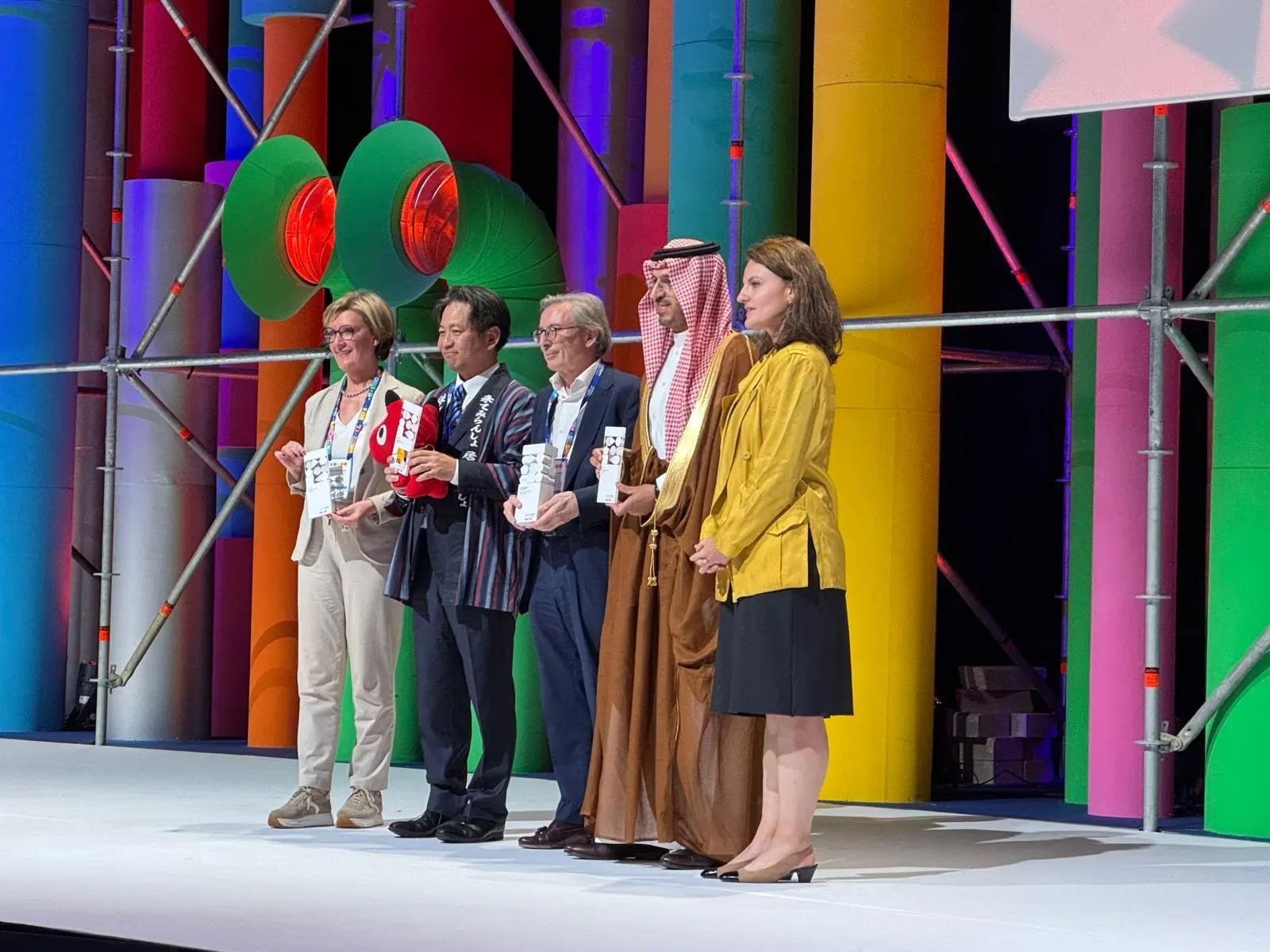
The provincial program Slimme Regio from Vlaams-Brabant is one of four finalists for the World Smart City Awards 2026 in the Governance & Economy category. The province received international recognition at the Smart City Expo World Congress in Barcelona, standing alongside major cities like Madrid, Riyadh, and Aizuwakamatsu.
The Slimme Regio program of the province of Vlaams-Brabant has received international recognition at the Smart City Expo World Congress in Barcelona. Selected from 533 submissions from 68 countries, Vlaams-Brabant was named one of the four finalists in the Governance & Economy category of the prestigious World Smart City Awards 2026. The province stood on the world stage alongside Madrid, Riyadh, and the Japanese city of Aizuwakamatsu. The award ultimately went to Madrid.
Deputy Ann Schevenels represented the province during the award ceremony on Wednesday, November 4. The finalist position is a significant recognition of how Vlaams-Brabant brings together local governments, businesses, knowledge institutions, and citizens to address societal challenges using data and technology.
“
"Being selected as one of the four finalists in our category from 533 international submissions is a special recognition. We stood in Barcelona alongside major international players, but this finalist position is primarily a credit to everyone in Vlaams-Brabant who is helping to build a smart region. By combining knowledge, expertise, and strengths, we are making technology a lever for a more sustainable, liveable, and stronger region."
The province was present at the Smart City Expo World Congress with a delegation of 15 representatives from the province and local authorities, including Boutersem, Haacht, Lennik, Scherpenheuvel-Zichem, Halle, and Tienen. During the congress, participants were introduced to international examples of smart and sustainable innovation and exchanged experiences with cities and regions worldwide. The study trip also offered an opportunity to bring back new insights and contacts to Vlaams-Brabant.
The Smart City Expo World Congress annually brings together cities and regions from around the world to discuss smart and sustainable innovation. The World Smart City Awards recognize projects and strategies that contribute to societal change. The Governance & Economy category focuses on innovative governance models, data-driven policy, and new forms of collaboration.
This very collaboration is the core of Slimme Regio Vlaams-Brabant. The provincial program brings together local governments, businesses, knowledge institutions, and citizens to develop solutions for concrete challenges in areas such as water, mobility, energy, governance, economy, and tourism. Technology here is not an end in itself, but a means to create societal added value.
The approach is based on the principle of the "quadruple helix": innovation arises from combining the expertise and perspectives of government, businesses, knowledge institutions, and citizens. In the subsidized projects, at least three of these four groups actively collaborate.
“
"What I am most proud of is not a single technology or project, but the network we are building together. Local governments know the challenges on the ground, companies bring technological expertise, knowledge institutions add research and insights, and citizens know what is needed in their living environment. By bringing these perspectives together, we develop solutions that are not only innovative but also actually used. The fact that our regional approach stands on a world stage alongside major international cities shows that our regional cooperation might be our most important innovation."
The international competition makes the finalist position particularly significant. Vlaams-Brabant competed against a large-scale data and AI approach from Madrid, a digital platform for infrastructure work coordination from Riyadh, and an innovative collaboration model from Japan. Worldwide, more and more cities are using smart technology to make their cities more liveable, sustainable, and efficient. Vlaams-Brabant extends this approach to the entire region. By jointly tackling challenges and sharing expertise, even smaller municipalities gain access to technological innovation that they would find harder to achieve individually.
This is one of the program's key strengths. Slimme Regio not only stimulates the development of new solutions but also focuses on knowledge sharing, reuse, and scaling up. What is tested in one municipality can thus help other local authorities move forward.
Through the annual subsidy calls of Slimme Regio, 32 innovative projects with 112 project partners have already been supported. The projects address diverse societal challenges, from water management and flood prediction to sustainable mobility, energy management, and digital public services. Artificial intelligence, sensors, digital twins, and smart data applications are employed. The program always starts from a concrete need on the ground. By jointly developing and testing solutions in practice, knowledge and experience are gained that are also valuable for other municipalities and organizations.
In September 2026, nine new Slimme Regio projects were launched. The province continues to invest in innovative solutions for societal challenges and in collaboration between public and private partners. New ideas will also have a chance in 2027. Through a new subsidy call, the province will again support collaborations aiming to use data and smart technology for concrete challenges in Vlaams-Brabant. Project proposals can be submitted until January 31, 2027.
Madrid ultimately took home the award, but Vlaams-Brabant returns with significant international recognition. The program demonstrates that even a relatively small European region can distinguish itself on a global level by experimenting locally, collaborating regionally, and sharing knowledge broadly. The province continues to build a network where innovative ideas grow into solutions for the entire region. Vlaams-Brabant receives international recognition while also continuing to learn from other innovative regions.