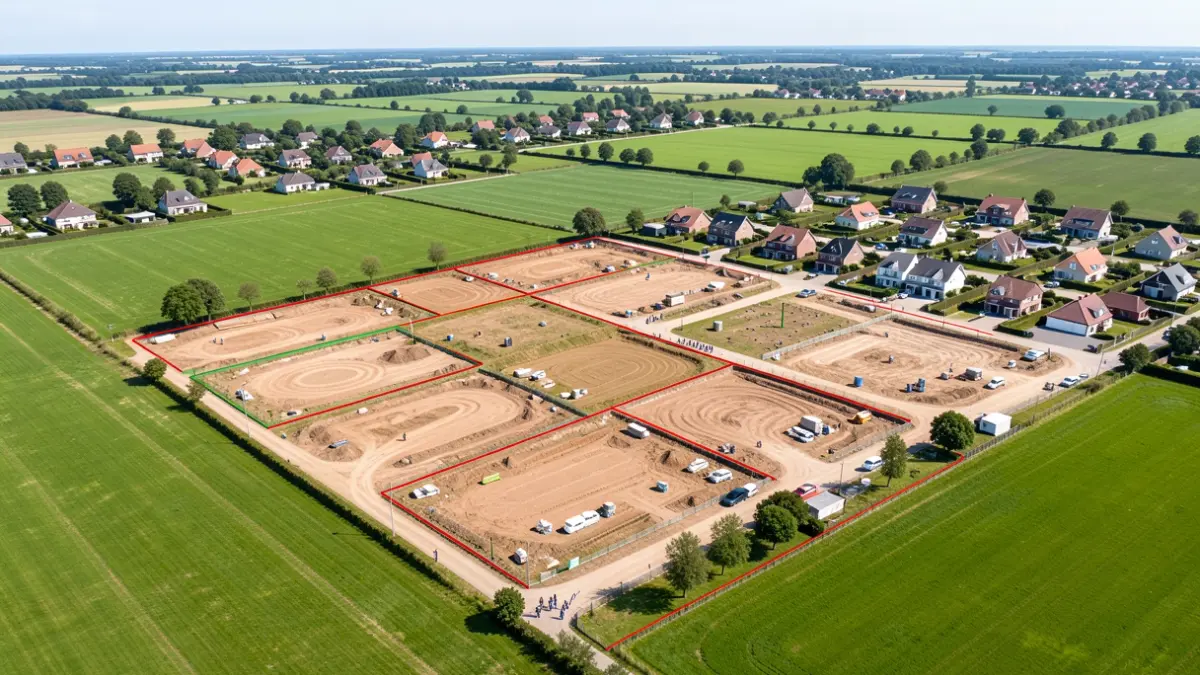
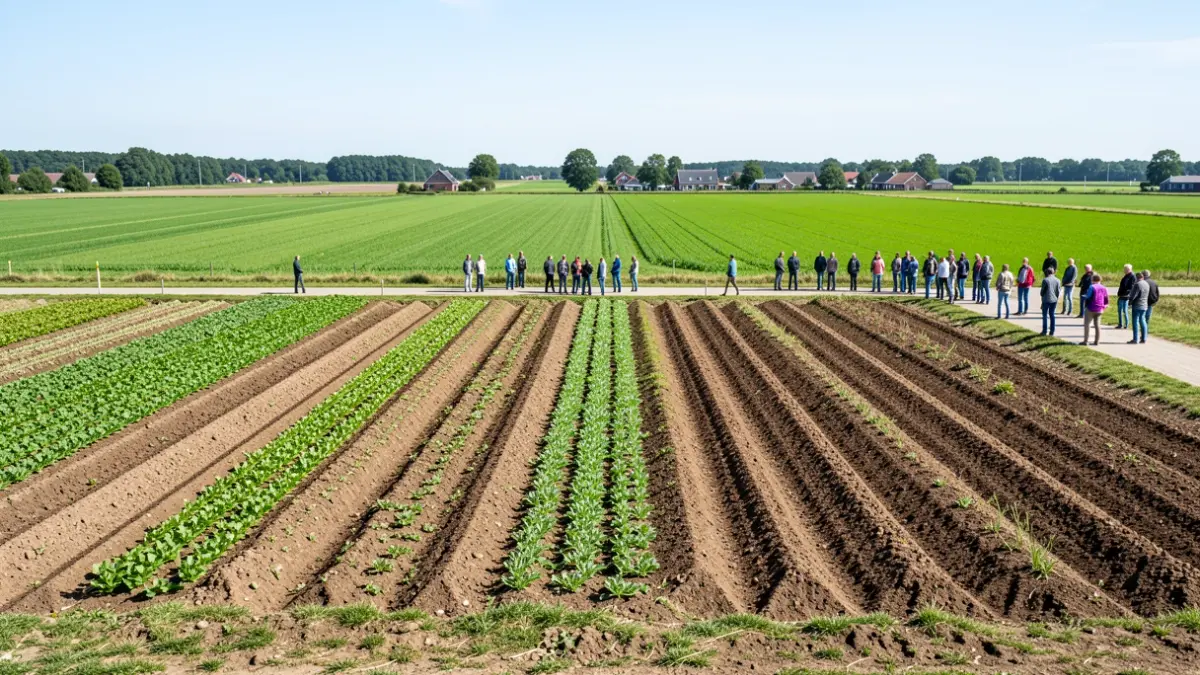
The platform, located at plot Duigemhof, will test diverse agricultural strategies over the next five years. The primary objective is to gain insight into the impact of these strategies on soil quality, crop yield, and financial feasibility.
The research is divided into five strips, each with a different cultivation strategy. Three strips vary only the soil tillage method: ploughing, non-inversion tillage, and direct drilling. These strips use a single variety, with fertilization and crop protection following standard agricultural practices.
The fourth strip employs minimal soil tillage, uses a mixture of varieties with a clover under-sowing, and limits the use of chemical inputs. The fifth strip is entirely organic, with ploughed soil and a single organic variety.
This setup allows for monitoring not only the effects on the soil but also for accurate tracking of yields and costs. This autumn, winter wheat was sown. The variety Horizon was chosen for the ploughing, direct drilling, and non-inversion tillage strips, while Wendelin was used in the organic strip. For the mixture in the fourth strip, the choice fell on Tomjol, Sverre, and Horizon.