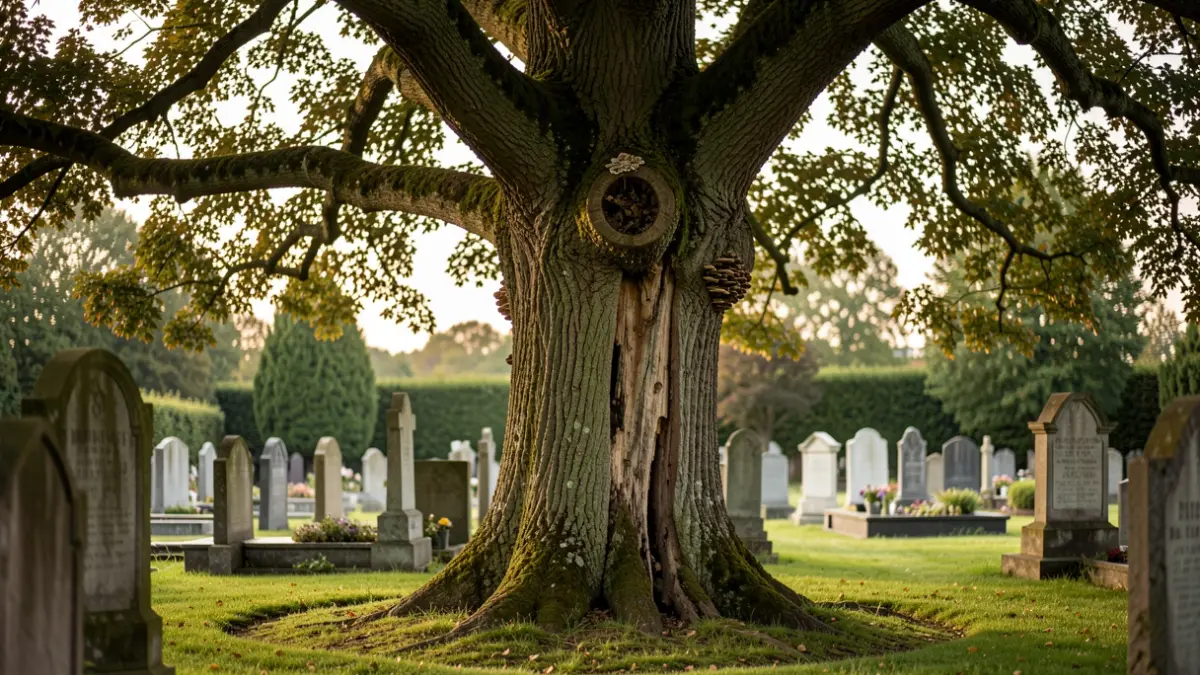
The peace beech in the cemetery of Zulzeke, a familiar landmark for over a century, was planted in 1919 to mark the end of World War I. Recent inspections by tree experts reveal that the tree's health is in continuous decline, significantly weakened by giant mushroom and the effects of climate change, making recovery impossible.
While the tree remains a special feature of the cemetery, the safety of residents and visitors is paramount. Consequently, the municipality will have to arrange for its felling. However, this will not happen immediately, as the beech is part of Zulzeke's protected cultural-historical landscape and is a designated heritage object.
Before any further steps are taken, a management plan will be developed. This plan will explore how to best preserve the heritage value and character of this unique site. Future considerations include planting a new tree on the cemetery grounds, chosen to suit the local conditions. Grafts will be taken from the current peace beech to preserve its genetic material, potentially to grow into new trees elsewhere in the Flemish Ardennes. The wood from the trunk might also be used to create new benches for the cemetery.
This approach allows for a respectful farewell to the old beech, honoring its history while simultaneously investing in the future landscape of Zulzeke.