The City of Antwerp has updated its Climate Plan 2030, also known as ‘Antwerp for Climate’. The plan, originally approved in December 2020, aims to reduce CO2 emissions by 50 to 55% by 2030 compared to 2005 and to be climate-neutral by 2050. Antwerp was the first Flemish city with such ambitious reduction targets.
With the new administrative agreement and the multi-year plan for the current legislature, the policy measures have also been updated to achieve the 2030 ambitions. The city continues to focus on sustainable urban development, including the rollout of a district heating network. Local energy production from sun and wind is encouraged, and support for individuals and businesses is simplified. The Housing and Energy Desk continues to guide residents with coaches and financial support for home sustainability.
The recently published emission inventory for 2024 shows that Antwerp is on track: greenhouse gas emissions were 38.2% lower than in 2005, bringing the 2030 reduction target of 50-55% within reach.
“"With this update, we are making our climate ambitions very concrete. By 2030, we want to realize an additional 100 hectares of park, comparable to seven times Park Spoor Noord. But it's about much more than just extra square meters of green. We want Antwerp residents in every neighborhood to find more trees, shade, water, and places to cool down. Because climate policy is ultimately about protecting people and ensuring our city remains livable even on hot days."
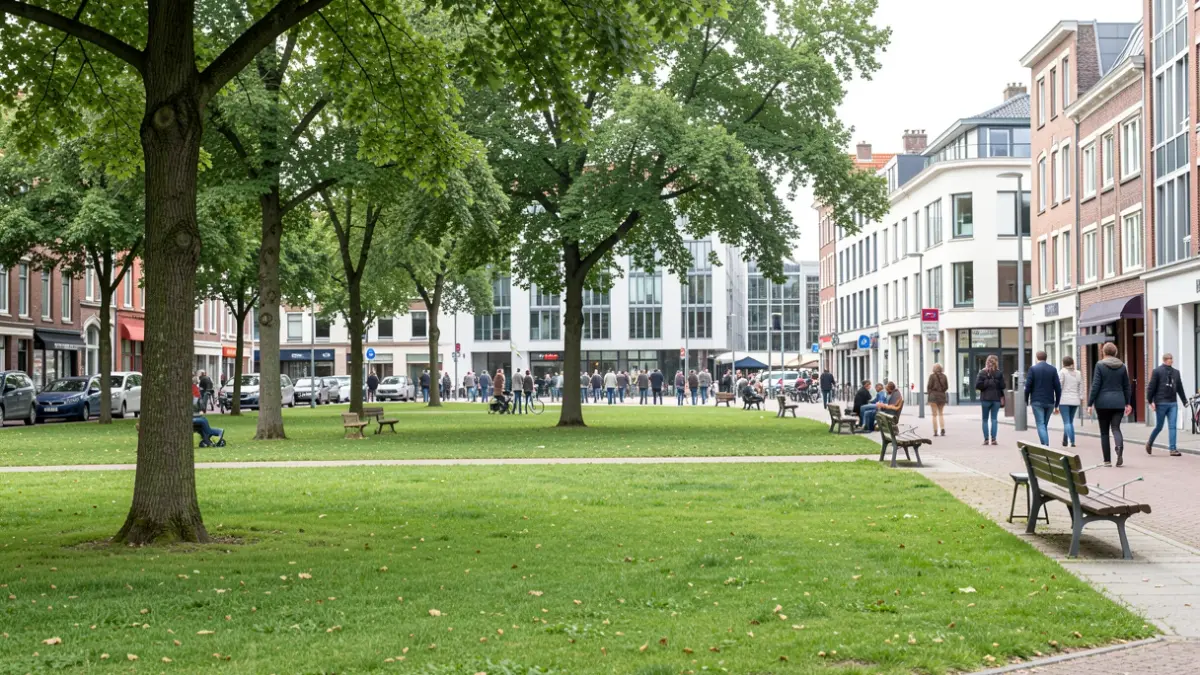
By 2050, Antwerp aims to be a climate-resilient city, prepared for challenges such as drought, heat, and waterlogging. This is pursued through more quality green spaces and water in both public and private domains. Specific objectives for 2030 include an additional 100 hectares of de-sealing, 100 hectares of parkland, 100 hectares of tree canopy cover, and 100 new cooling spots compared to 2021. By 2050, every resident should have a view of 3 trees in the city, live in a neighborhood with 20-30% tree shade cover, and have access to sufficient cooling green space within walking distance.
The collaboration model is also being updated. In recent years, a strong foundation has been laid for cooperation with societal and industrial partners through the Climate Council and climate director. In the coming years, this collaboration will be further developed through breakthrough programs such as collective renovation, green-blue neighborhoods, and climate safety to address bottlenecks and accelerate actions.