In early 2027, work will begin on the Linkerscheldeoever in the port of Antwerp to compensate for the loss of natural habitats. This initiative, undertaken by Port of Antwerp-Bruges, Maatschappij Linkerscheldeoever (MLSO), and Natuurpunt, will allow for the redevelopment of unused port areas for industrial purposes.
The importance of resilient nature in the Scheldt region is highlighted by the Flemish-Dutch Scheldt Commission (VNSC). The Lower Scheldt is recognized as part of Natura 2000, the European network of protected nature areas.
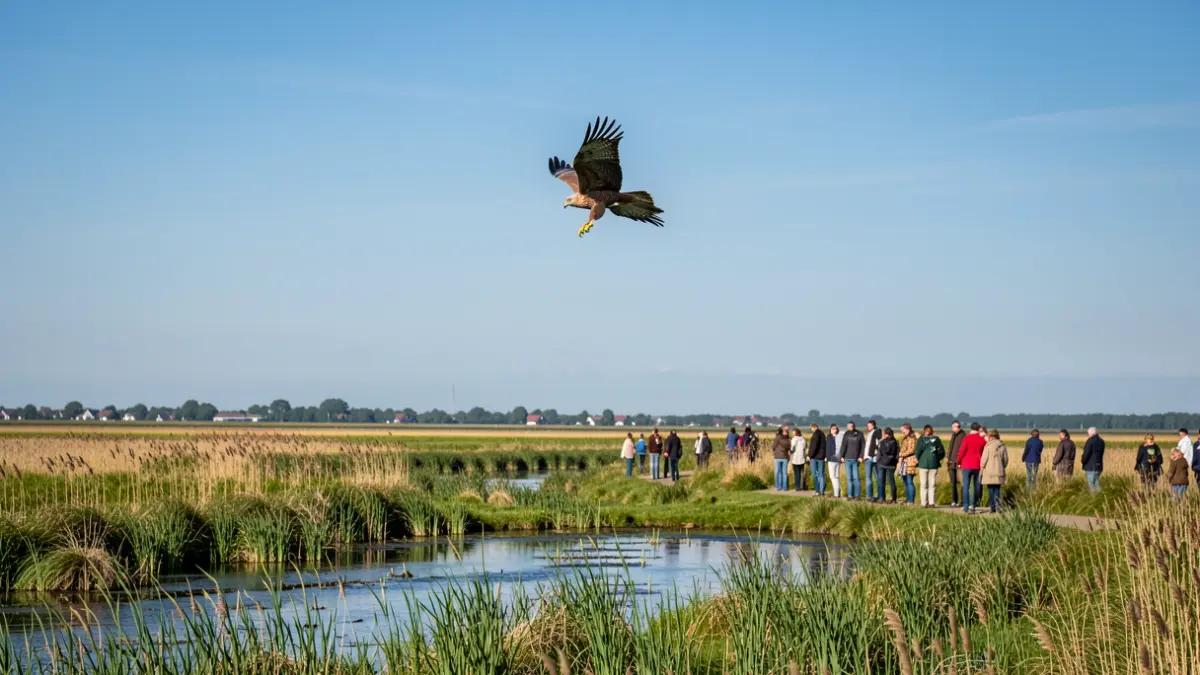
In Sint-Gillis-Waas, the Saleghem nature reserve will be expanded, and the original landscape of the Rietland (Reedland) will be restored. Near Saleghem, a new nature zone of approximately 12 hectares will be created, featuring ponds and reed plantings. This area will also include natural grasslands and foraging grounds, crucial for protected birds of prey such as the marsh harrier.
The Rietland will be enhanced with broad reed beds combined with moist, species-rich grasslands that will be grazed. This will create an open landscape providing space for diverse plant species, insects, and birds. Adapted management on certain fields will increase the availability of food for wild birds, insects, and mice.
In Kallo, the synergy between nature and agriculture will be promoted by merging small agricultural plots. Along the edges of existing dikes, the terrain will be slightly excavated to encourage reed growth. The excavated soil will then be used to create new fields on the buffer dikes. These adjustments will make it easier for the marsh harrier to find food and will improve the habitat for reed birds like the bluethroat, reed bunting, and reed warbler.