Knokke-Heist is making every effort to offer beach concessions again next summer and to guarantee maximum legal certainty. To this end, the municipality is initiating a highly simplified market consultation procedure and strictly applying the rules of the provincial spatial implementation plan (PRUP) Strand en Dijk. This strict application, driven by the Council of State's interpretation, has consequences: in the 'central day-recreation area,' no more than half of the beach length may be occupied. This leads to a reduction of 4 beach bars, 1 children's park, and about 400 beach cabins.
Bert De Brabandere, Alderman for the Beach, acknowledges that the adjustment will be difficult for all involved, especially current operators. "But we want to have beach bars on our beach again next summer," he states. "The PRUP stipulates that at least half of the busiest part of the beach must remain publicly accessible. We are now strictly applying this, so that every spot we allocate fits within the rules. With a highly simplified market consultation procedure and strict application of the PRUP, we are providing everyone with clarity on what is and isn't possible. The college and our services are working tirelessly to launch this new procedure as quickly as possible."
Before the new beach concessions can become operational, several steps remain. The municipal council will redefine the basic rules for sub-concessions in an adapted regulation in November. Before the Christmas holidays, the college will approve a new guideline, immediately followed by the start of the tender procedure. After the award, each operator must apply for a building permit; construction can begin upon obtaining an enforceable permit.
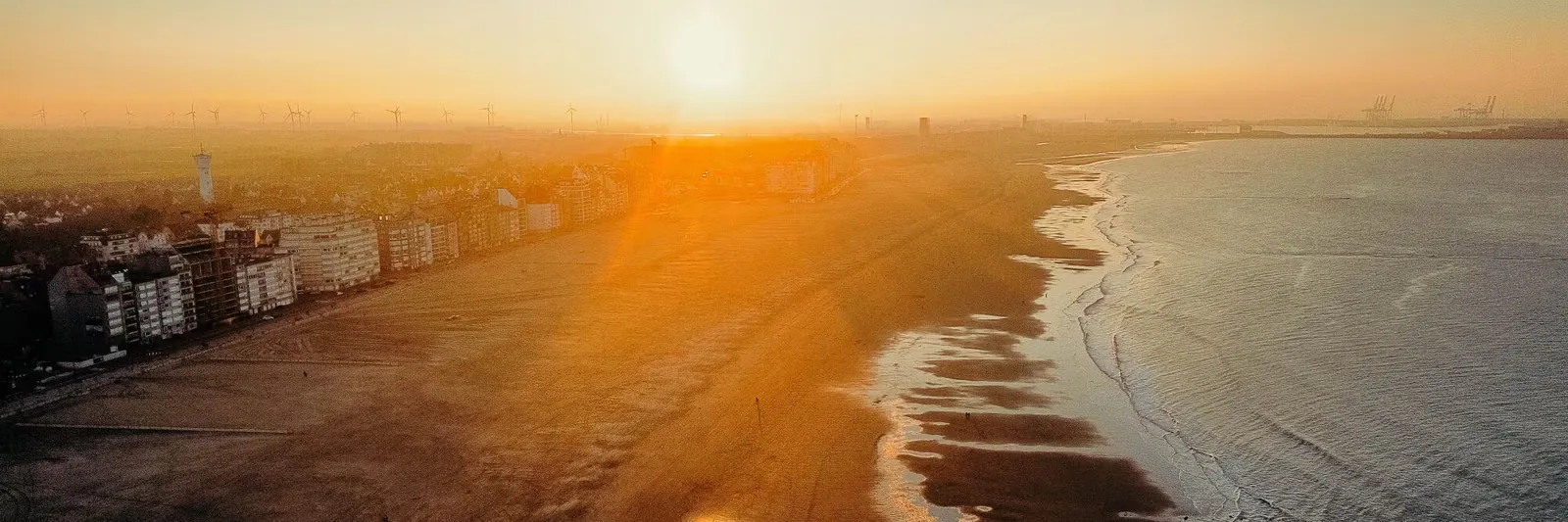
The central area, approximately 5 kilometers long from the Bay of Heist to the Director-General Willemspark, and from watersports club Anemos to watersports club River Woods, must remain at least half free. This means about 2.5 km of the beach must remain publicly accessible. The municipality is opting for a balanced distribution, resulting in 20 beach bar areas (down from the current 24) and 1 children's park.
Each beach concession allows for a temporary structure of a maximum of 60 m² (max. 20 m² for counter sales, 20 m² for sanitary facilities, and 20 m² for storage), as much as possible bundled against the dike while preserving sea views. Next season, there will be approximately 400 fewer beach cabins, partly due to last year's stricter regulation allowing a maximum of one cabin per address. Each permit holder will retain a pitch for their cabin, and cabin owners will be informed about the implications as soon as possible.
The beach primarily serves as a sea defense, protecting the coast and hinterland against flooding. The PRUP states that beach recreation remains subordinate to this protection, and structures must be temporary and limited. Furthermore, the PRUP aims to keep the beach spacious and open, ensuring that walkers on the dike can continue to see the sea and use the beach freely.
The expected timeline for the new beach bars is as follows: November 2026: municipal council approves adapted regulation; before the Christmas holidays: college approves guideline; early 2027: submission of proposals and award of sub-concessions; spring 2027: application for building permits; before the summer holidays 2027: construction and opening of beach bars, provided procedures do not cause delays.
The current sub-concessions expire on December 31, 2026. European and national regulations compel the municipality to award sub-concessions through a transparent procedure, respecting the (European) principles of equal treatment and fair competition. Furthermore, any extension would require a new building permit, which cannot be issued for structures that conflict with the PRUP.
To ensure the new procedure runs correctly, all interested parties will receive the same information simultaneously after its launch.