
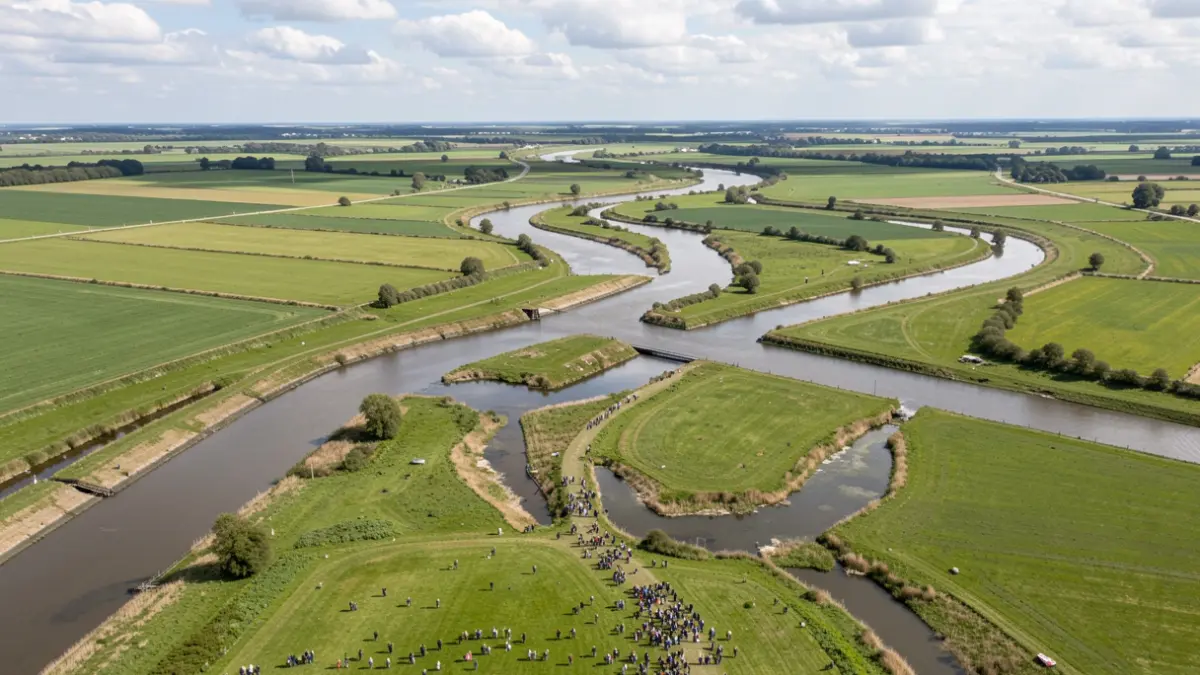
Within the Reshape-D project, which officially commenced on July 1, 2026, and will run until June 30, 2032, various measures are being implemented to enhance water management in the valley. The project builds upon previous plans and has a total budget of 25.8 million euros, with 8.45 million euros in European funding from the LIFE programme.
Flemish Minister for Agriculture and Environment Jo Brouns highlighted the project's importance: “We must give water back space where possible. By restoring the Dendervallei and retaining water longer, we make the region more resilient to both drought and flooding. Simultaneously, we provide more opportunities for nature.” Minister of Mobility, Public Works, Harbours and Sport Annick De Ridder added that the project will make the valley more resilient to the impacts of climate change through targeted acquisition, demolition, and de-paving, with attention to involved owners and residents.
An ambitious goal is the creation of approximately 800 hectares of wet nature and floodplains. Potential interventions include restoring natural valley floors by de-paving and excavation, limiting the draining effect of ditches, and reconnecting water and nature corridors. These measures are intended to make the Dendervallei more resilient to both floods and drought, while also creating habitats for plants and animals.
Pilot areas for large-scale valley restoration include the valley of the Molenbeek and Rijt between Zandbergen (Geraardsbergen) and Appelterre (Ninove), and the Bellebeekvallei on the border of Liedekerke and Affligem. In Zandbergen, the Molenbeek will be connected to the Rijt, improving flow and water availability. In the Bellebeekvallei, a new culvert will be built, and the stream will be restored to its natural meandering course.
The project is being executed by the Department Omgeving, the Agentschap voor Natuur en Bos, De Vlaamse Waterweg nv, the province of Oost-Vlaanderen, Workroom vzw, and the Vlaamse Milieumaatschappij, which also manages coordination. Collaboration with local authorities, farmers, nature organizations, and residents will occur through information sessions and workshops.


