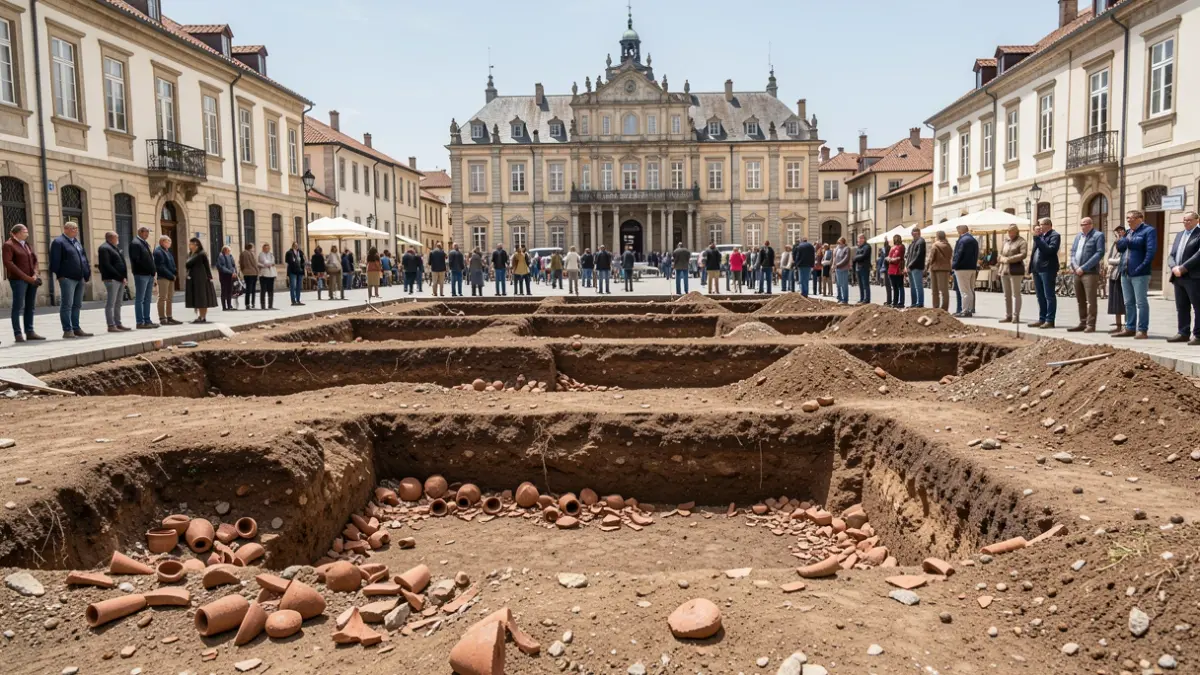
Archaeologists have completed the initial research phase on the Grote Markt in Aalst. The findings, predating the construction of the second city wall in the early 13th century, illustrate the site's transformation from pastureland to a residential area and later a market square. The results were announced on October 29th.
In the area in front of the Old Town Hall, well-preserved traces were discovered. Until the 12th century, this part of the current Grote Markt was open landscape outside the oldest city core, used as pastureland. A narrow ditch marked a property boundary that still follows the present-day layout. Archaeologists found pits filled with household waste, including shards of globular pots typical of the Middle Ages, with some rims characteristic of the 12th century. This suggests the area began to be used for settlement during the 12th century, confirming earlier findings from the Old Town Hall and its courtyard.
In the second half of the 13th century, the terrain changed again with the onset of market activities. A dark layer of waste and walking surfaces indicates this development. Future phases will investigate how the settlement and market development are connected.