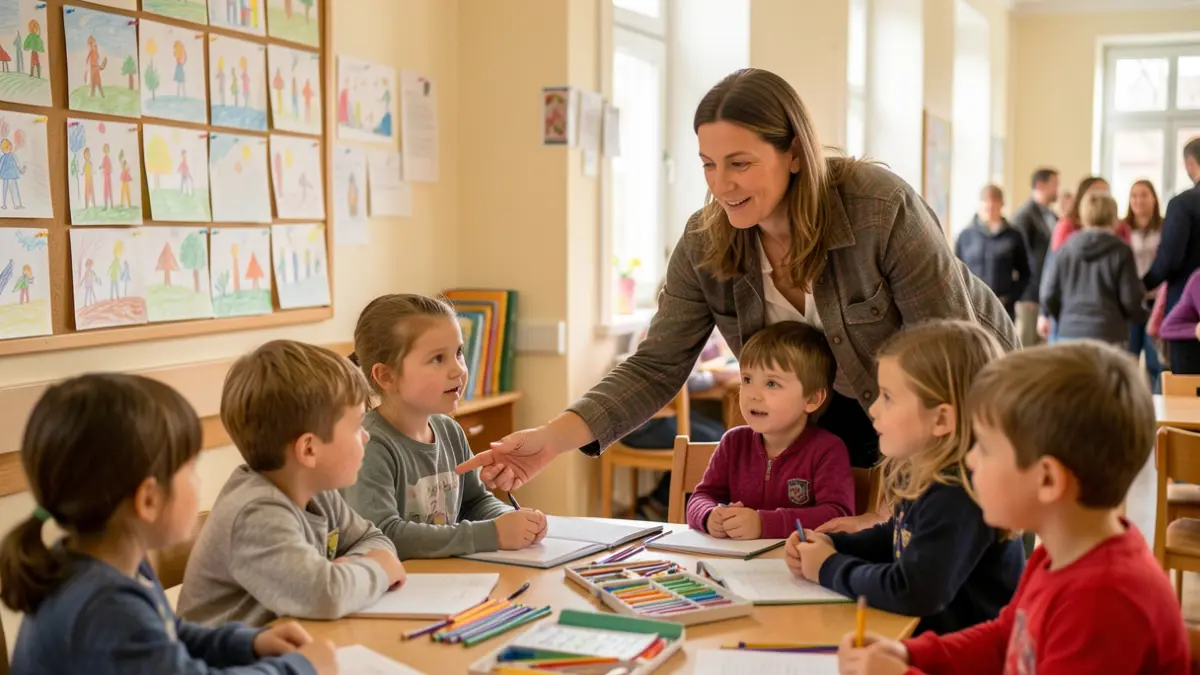
Ter Heide, an institution dedicated to children and young people, provides an educational program fully adapted to the individual needs and capabilities of its residents. This education can take place in classrooms on campus, in the living group, or exceptionally in schools outside Ter Heide.
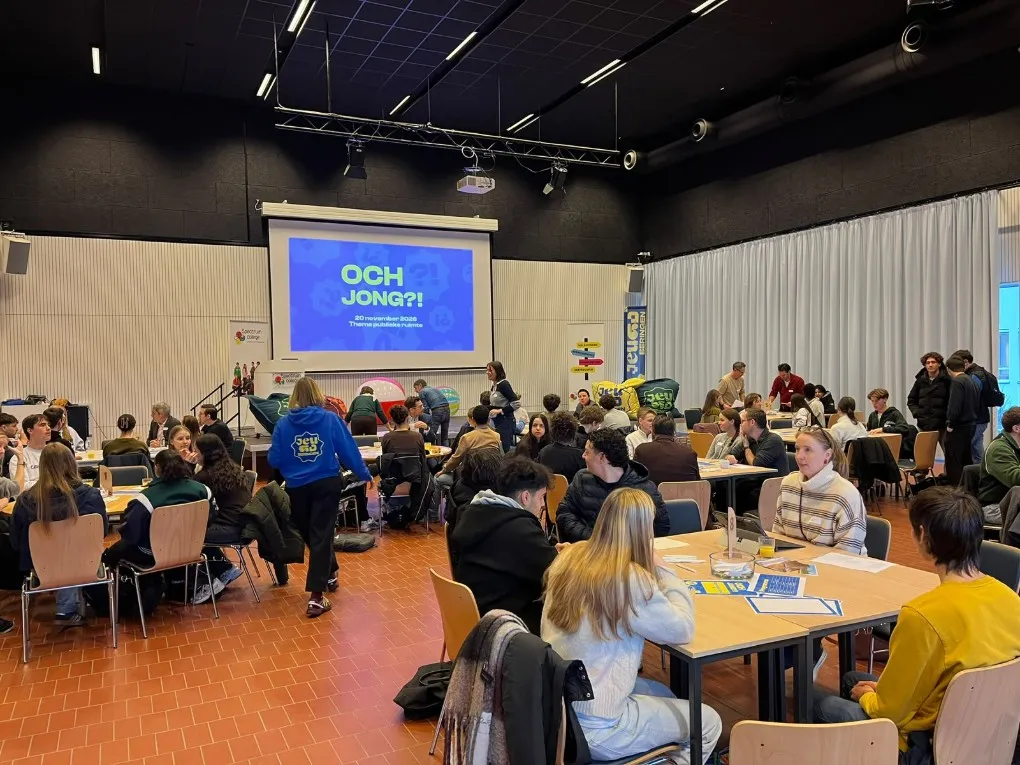
On November 20th, Children's Rights Day, attention is drawn to the anniversary of the International Convention on the Rights of the Child. This convention, agreed upon by the United Nations in 1989, guarantees every child the right to safety, health, and education. Education is seen as a means to help children develop their personality, talents, and potential.
Goedele Degraeuwe, care coordinator and education ambassador at Ter Heide, and Tine Menten, a teacher at BuSO De Wissel, share their insights on education for the residents. Both emphasize that education is a right, not a favor.
Previously, many children with severe disabilities were exempted from compulsory education. Thanks to societal changes and parents advocating for their child's right to learn, exemptions are now rare. Compulsory education runs from age five to eighteen, and for Ter Heide residents, the educational offer can extend up to 21 years. Ter Heide has long upheld the principle of tailored education.
Often, education is the first thing to be dropped when a child is struggling. However, Ter Heide prioritizes well-being. A boy who moved in last year was initially given no educational program for a few months to help him relax, after which he himself expressed a desire to attend classes again.
Learning encompasses more than reading, writing, and arithmetic. It also includes learning to communicate, learning to eat a sandwich, or managing stimuli. A boy with significant motor and cognitive limitations learned to indicate his preferences through touch and sounds, representing a fundamental aspect of being human and influencing one's own life.
The educational offerings vary: the campus school BuSO De Wissel and BuBaO De Berk have classrooms on campus. Education can also be provided at home, for a maximum of four hours per week, sometimes combined with school lessons. For students from Het Ven and De Meers, there is permanent home-based education (POAH). Exceptionally, education can also take place outside Ter Heide.
The number of teaching hours varies greatly per resident, from two to fifteen hours per week. The approach is always personalized, whether it's one-on-one, in a small group, or combined with outings. School and Ter Heide continuously coordinate the program.
There is a strong partnership between Ter Heide and the schools. Care coordinators attend resident's class councils, and cooperation agreements are in place. Expertise is exchanged, for example, on safety techniques and communication training. Continuity is crucial; the same teacher ideally follows the same students to build trust.
Tine Menten, a teacher at BuSO De Wissel, describes her day starting with team meetings, followed by picking up students from their living groups. Lessons last fifty minutes and include activities like cooking, crafts, and communication training. Well-being is paramount; the schedule is adjusted if necessary.
A successful lesson is rarely defined by achieving a specific goal, but rather by the student's enjoyment. The difference between the classroom and the living group is that the classroom offers more time for individual attention, such as learning to write their own name or repeating words.
Education definitively ends at age 21, usually when residents receive a personal support budget. This moment is carefully managed, with graduations, gifts, and diplomas marking the end of a life phase.
Tailored education gives residents a place and value. Goedele Degraeuwe emphasizes that every child has the right to education and can learn, at their own pace and without excessive expectations. She hopes for an educational system that can more easily provide customized offerings.
Teachers here need 'that little extra': they must ensure the child's maximum development, where every success is a significant achievement. Tine adds that patience and attention to small details are essential, such as a child's smile.
Ter Heide thanks the teachers who help residents grow. For those interested in a job or internship at Ter Heide, vacancies and internship opportunities are encouraged to get to know the organization from the inside.