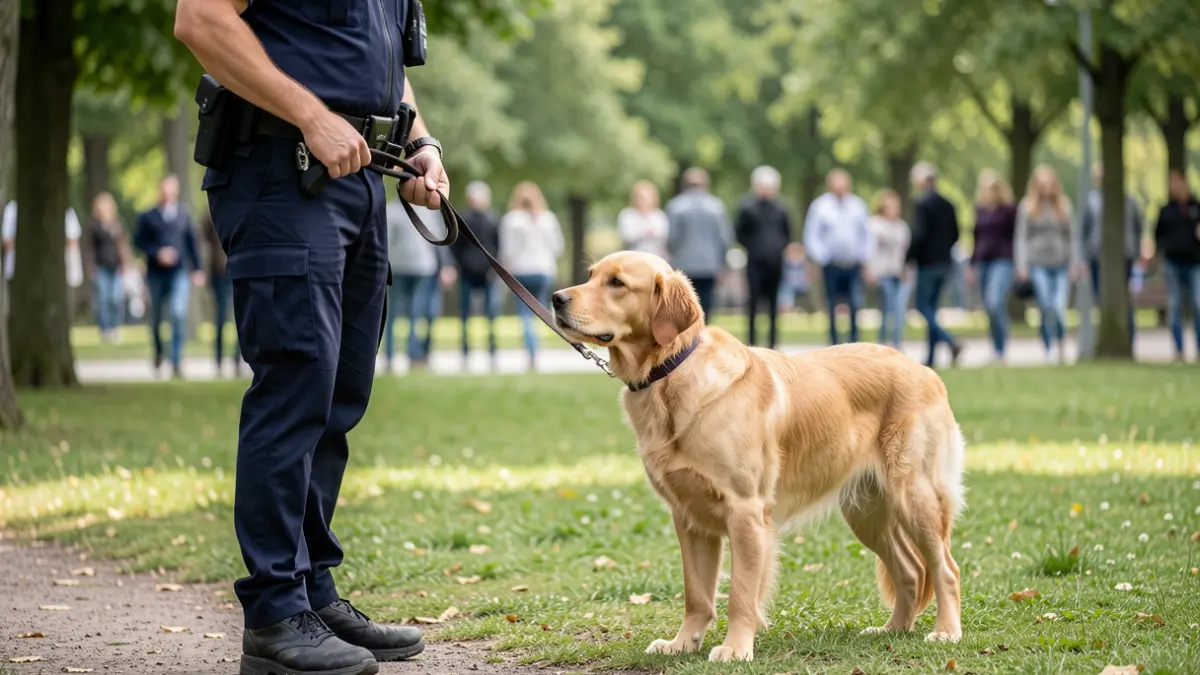
Police Zone Grens receives many annual reports concerning animal welfare. Inspector Danielle de Moor, working in the animal welfare department, provides insight into the procedures and legislation applied. The department handles reports on the care, housing, and medical treatment of animals, as well as inquiries about permits and registrations.
The primary legal basis is the Flemish Animal Welfare Code of 17 May 2024, which replaced the earlier law of 14 August 1986. Additionally, various decrees and ordinances contain specific rules for certain animal species or matters.
The most common reports involve neglect, such as dogs and pasture animals kept without adequate shelter. The distinction between animal cruelty (active harm) and neglect (failure to provide care) is important, with neglect often stemming from a lack of awareness regarding an animal's needs.
Following a report, an on-site inspection takes place. This involves checking records, registrations, and permits. If necessary, collaboration occurs with veterinarians, farriers, or the inspector-veterinarian of the Flemish Government. Based on the findings, measures can be imposed, followed by a follow-up inspection.
The police work closely with various partners, including the Canina animal shelter, other rescue centers, the municipality's stray cat policy, veterinarians, farriers, the FAVV (Federal Agency for the Safety of the Food Chain), the Agency for Nature and Forest (ANB), and Cites, which regulates trade in endangered wild animal and plant species.
Public misunderstandings often relate to the registration requirements for dogs and cats, and the sterilization obligation. Many people believe the police only check for food and water, whereas the duty of care is much broader.
Autumn is the quietest season for animal welfare reports. Winter brings challenges concerning shelter and water access, spring sees an increase in kittens, and summer requires attention to heat, shelter, and water availability.
Signs of animals in need of help include being noticeably underweight or overweight, a dull coat, untreated wounds, or reduced mobility. People sometimes make mistakes with good intentions, such as feeding incorrect food or topping up water, which can complicate the assessment of the situation.
For accurate follow-up of reports, detailed information is essential, preferably with photos. Location, animal species, responsible party, and the duration of the situation are key data points.
After a complaint, an investigation is conducted, an on-site check is performed, and the animal inspectorate is informed. Depending on the severity, a warning or a formal report may follow, forwarded to the public prosecutor's office. In severe cases, animals can be confiscated, and a judge can impose a temporary or permanent ban on keeping animals.
Inspector Danielle de Moor is motivated by her passion for animals and the ability to see quick results. She emphasizes that most owners do not intentionally act poorly but often struggle with a lack of knowledge, financial resources, or hopeless situations. Helping both animals and people, and combining fieldwork with administrative tasks, drives her.
When concerned about an animal's welfare, one can contact Police Zone Grens. For non-urgent matters, call 03 620 29 29 or email pz.grens@police.belgium.eu. After office hours, the number redirects to 101. In urgent cases, calling 101 immediately is advised to allow for on-site assessments.