Local authorities, police, enforcement officers, supervisors, and volunteers are collaborating to prevent violations, enhance social control, and encourage positive behavior. This is achieved by highlighting the various forms of control, the certainty of being caught, and the penalties for infringements.
There is sometimes confusion between litter and illegal dumping, even though the result – waste on the ground – is the same. The difference lies in the starting point.
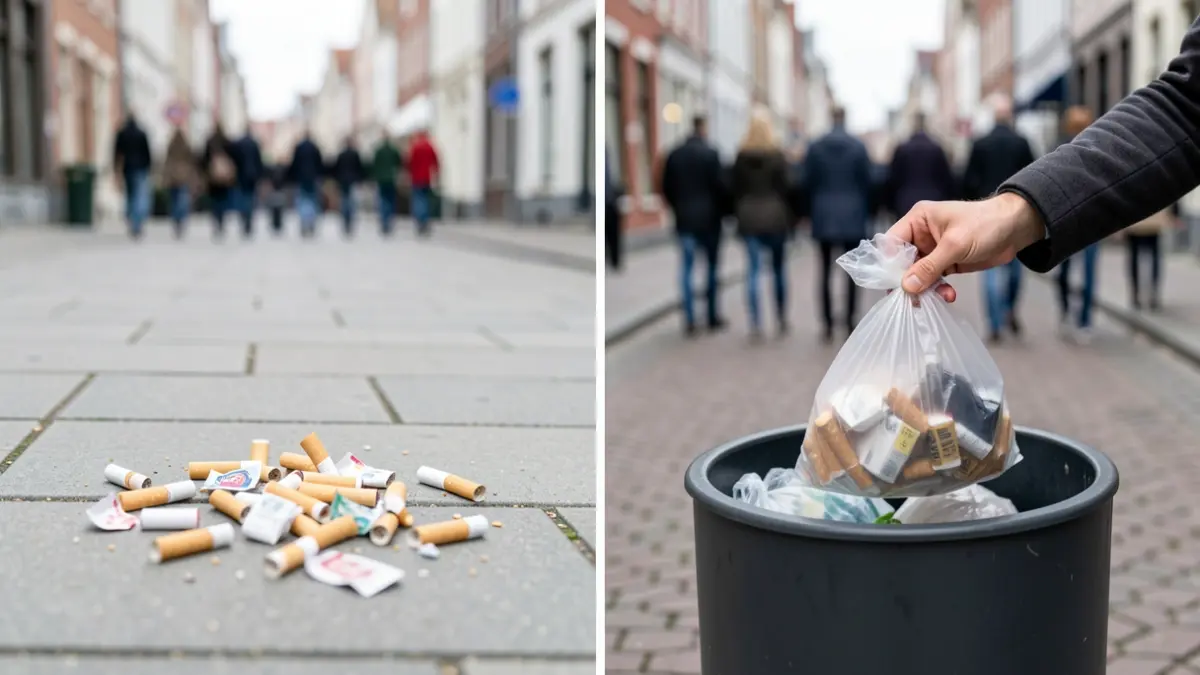
Litter is small waste left outdoors in an inappropriate place, either consciously or unconsciously. Examples include cigarette butts, chewing gum, food scraps, packaging, tickets, cans, bottles, umbrellas, and tissues.
Illegal dumpers deliberately avoid household or business waste collection. They leave waste in prohibited areas, at unauthorized times, and/or in incorrect bins or containers. This includes bags of household waste left in street bins, dumpings in anonymous locations, and waste left near glass banks and textile containers.
The fight against litter is important for several reasons. Waste decomposes very slowly or not at all, meaning it remains unless cleared by municipal services or engaged litter monitors. This can take weeks to years. Litter poses a threat to humans and animals, can cause injuries, illness, and death, and pollutes soil and seawater with microplastics that enter our food chain. Furthermore, litter is a major nuisance that makes an environment unpleasant and unsafe, and its cleanup costs the municipality significant funds.
If someone discards their waste, the best approach is to directly address the polluter about their behavior. The website Mooimakers offers tips for this. If one does not feel safe addressing the polluter, the waste can also be deposited in a bin. The message is clear: everyone loves a clean neighborhood.