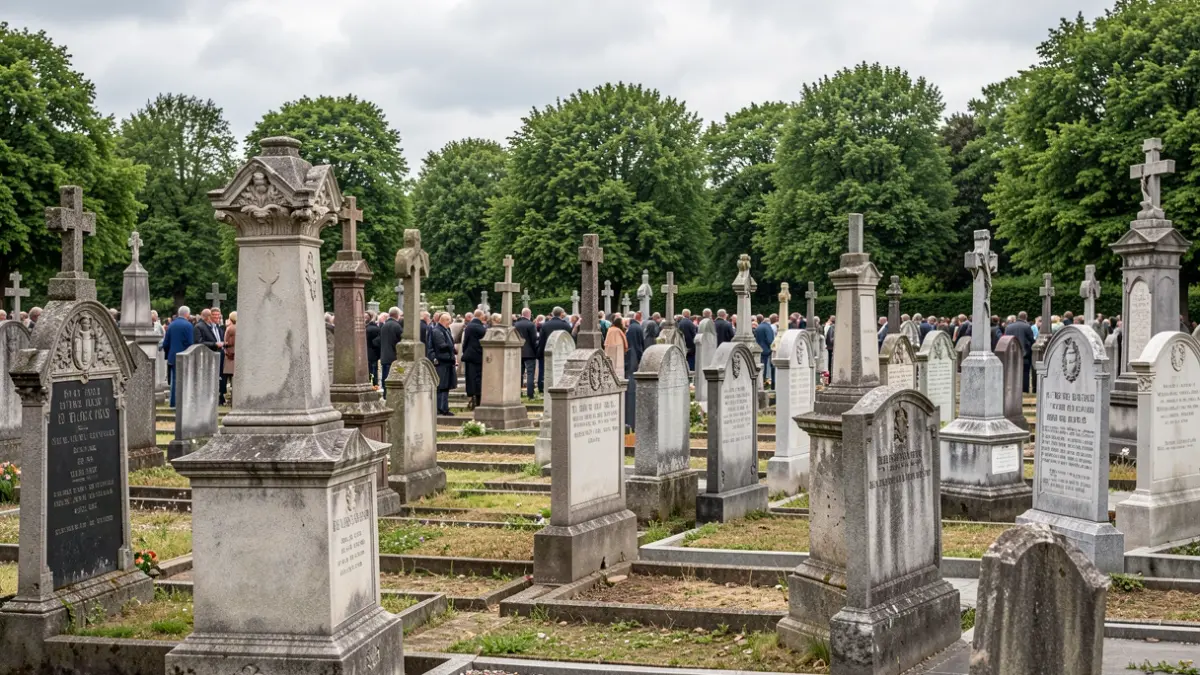
Around 40 heritage volunteers have been cataloging the funerary heritage at the Park Cemetery in Roeselare since March. They are researching not only the grave monuments but also the stories of the people buried there. The City of Roeselare, together with IEOD Midwest, aims to preserve and make accessible the valuable funerary heritage of the cemetery. The city, recognized as a built heritage municipality, is committed to preserving this special heritage site in the coming years.
The Park Cemetery, formerly the Oude Stedelijke Begraafplaats (Old Municipal Cemetery), originated in the early 19th century after Napoleon prohibited burials within churches. More than 200 years later, the cemetery continues to tell much about the city's history. The oldest part, the Campo Santo, is particularly valuable, featuring grave monuments, chapels, and a unique atmosphere.
Each grave will receive a digital identity card. Volunteers are meticulously recording names, dates, measuring monuments, and describing materials, style, design, and symbolism. Inscriptions, texts, and photographs complete the inventory, which will be entered into the Versteende Getuigenissen (Petrified Witnesses) database of Midwest. This forms an important basis for the preservation, management, and accessibility of the funerary heritage. In a subsequent phase, other parts of the cemetery with special local historical significance will also be addressed.
A second group of volunteers is searching for the stories behind the graves: who were the people buried here, what role did they play in Roeselare, and what stories are connected to their families? The City of Roeselare thus aims not only to preserve the grave monuments but also the history behind them. 'With this inventory, we are not only documenting valuable grave monuments but also keeping the stories of Roeselare residents alive. Thanks to the dedication of our volunteers, we gain a much better insight into this special piece of our city's history,' stated the city.
In the long term, the city intends to make the information digitally accessible to visitors. QR codes at selected graves and chapels can lead them directly to more information.