The LIFE CO-ACT project (Co-ordinated Action Roadmap for Climate Resilient Neighbourhoods) aims to help local authorities make neighbourhoods more resilient to heavy rain, drought and heat. The Flemish-Brabant province is the project coordinator, together with the municipality of Sint-Genesius-Rode, the Flemish Environment Company, KU Leuven, the municipality of Alkmaar and Vrije Universiteit Amsterdam. The experiences from the two pilot neighbourhoods will be translated into a practical roadmap for other local authorities.
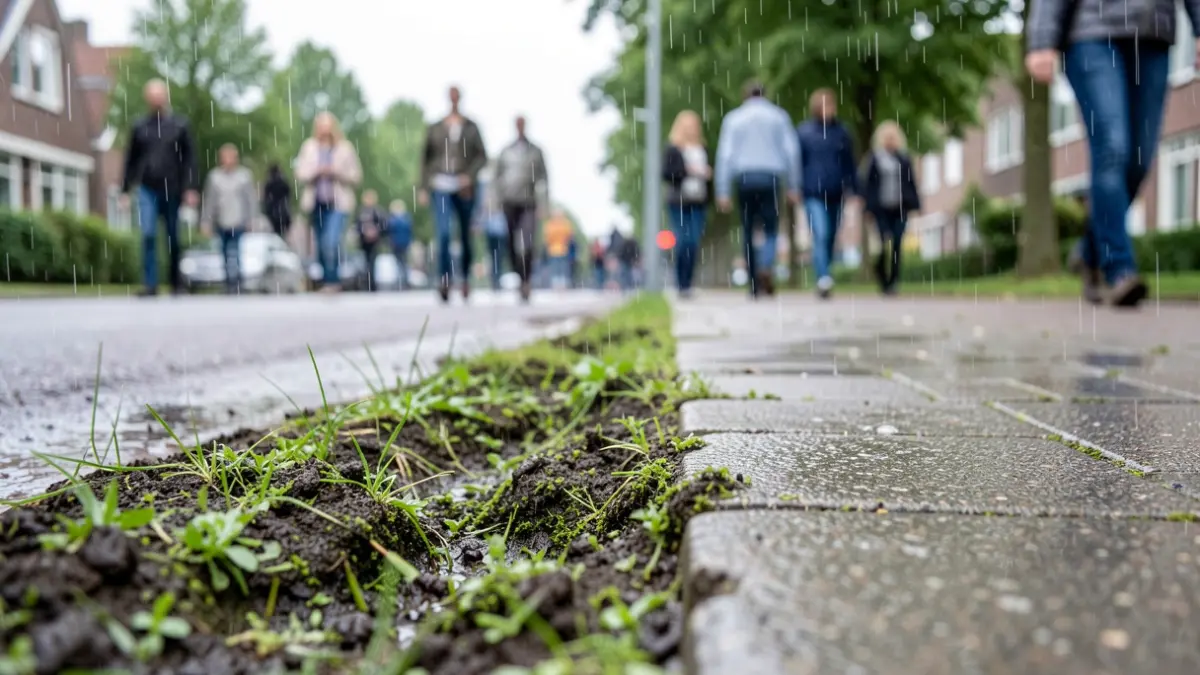
In the Golfwijk in Sint-Genesius-Rode, located high in the catchment area, researchers are investigating how rainwater can be retained and infiltrated locally. Existing plans for hardening reduction and greening are being developed. Residents receive guidance to also take measures on their own property, ensuring that measures on public and private land are optimally coordinated. This reduces flooding in lower-lying areas and retains water for dry periods.
“"The focus of the project is not only on streets and squares. Gardens and other private land also play a role. By coordinating measures on public and private domains, the project wants to show how an entire neighbourhood can better adapt to the consequences of climate change."
In addition to water management, the blue-green layout offers benefits such as less heat stress, more biodiversity and better air quality. KU Leuven and Vrije Universiteit Amsterdam monitor the effects on water management, heat, biodiversity and air quality, as well as resident involvement. The collected knowledge helps to refine the roadmap and make it applicable for cities and municipalities in Flemish-Brabant.
Local authorities can already get started with support, subsidies and practical information from the province for hardening reduction of the public domain. More information is available via the website of the Flemish-Brabant province.