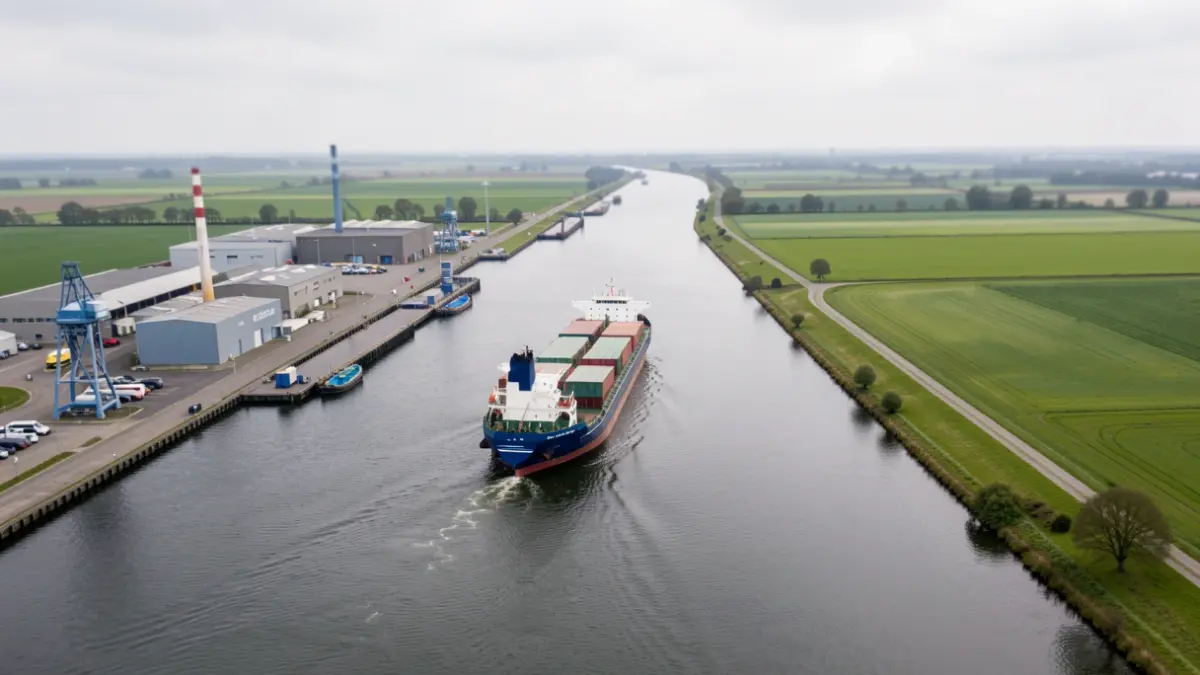
The Ghent-Terneuzen Canal is under increasing pressure due to drought and changing hydrological conditions, impacting navigability, water availability for businesses, water quality (salinization), and logistical reliability. North Sea Port actively informs its clients about potential impacts and collaborates with authorities to ensure canal accessibility.
UPDATE OCTOBER 22, 2026 (13:00) - There are no longer any draft restrictions in force. Due to recent rainfall and predicted rain, the water manager expects a stable and sufficiently high canal level, making restrictive measures unnecessary. However, the salinity remains very high, fluctuating between 9700 and 9900 mg/l, with a target of 3000 mg/l. The North Sea Locks are operational, with adjusted operating times for the New Lock to conserve water.
Previous updates indicated a concerning situation. On October 14, 2026, there was still insufficient water supply to maintain the canal's target level, with salinity rising to around 9900 mg/l. At that time, a draft restriction of 12.25 meters was in effect.
Water management for the Ghent-Terneuzen Canal is handled by Rijkswaterstaat for the Dutch section and the Flemish Government for the Flemish section. They are responsible for water level management, lock operations for sea and inland vessels in the North Sea Locks in Terneuzen, and monitoring water levels and salinity.
The challenges include reduced freshwater supply due to drought in Belgium and Northern France, and the influence of the North Sea Locks, which allow saltwater from the Western Scheldt to enter the canal with each lockage. This leads to lower water levels and increased salinity, affecting shipping and water users.