The VAPH's Participation working group, in collaboration with various stakeholders, has developed actions focused on the culture of consultation and participation. A key part was a study on the state of participation within VAPH care providers. "We wanted to gain better insight into the current situation in organizations," says Jade Werdefroy, policy support officer at the VAPH. "How is participation functioning with care providers today? And how can we structurally strengthen involvement in the future?"
The research combined a literature review with surveys of care providers and interviews with users and their networks. Two co-researchers with lived experience also contributed to the study. The research emphasizes that people with limited communication abilities must also be involved.
The study indicates that while much participation occurs at the individual level, there are still areas for improvement at the collective and policy levels. Sometimes participation is too symbolic, where input is heard but not always visibly acted upon, or feedback is insufficient. Vulnerable groups do not always receive adequate attention. "What about people who are less verbally expressive? People with few or no networks? They too must be involved," states Jade Werdefroy.
Fran Van Hoorebeke, staff member at FOVIG, recognizes these differences. "There are collective consultations that work well, where people are involved and their input is acted upon. But there are also places where consultation remains too formal and the agenda is primarily set by the facility."
To make involvement more concrete, the Participation working group has developed an inspiration framework. This framework assists organizations, users, and their networks. Fran Van Hoorebeke views participation, consultation, and co-decision-making as a ladder, moving from 'participating' to 'deciding together'. "Co-decision is about thinking together and making decisions together. This leads to more supported decisions. For us, it's about good care, a good life, and a flourishing life for people with disabilities."
Jade Werdefroy emphasizes that participation enhances quality of life, a finding confirmed by the research. Organizing co-decision-making requires training, time, and guidance. Collaboration with other sectors and local organizations is important and linked to inclusion.
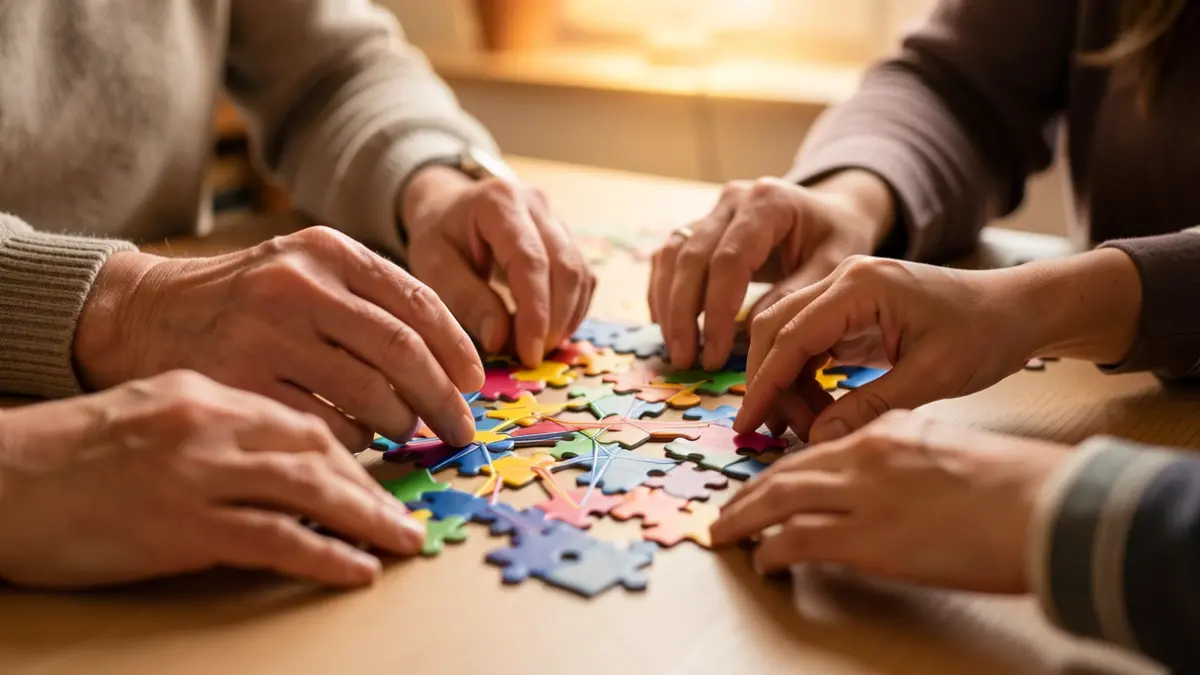
The inspiration framework, developed with various partners and validated by researchers, is not a checklist but a collection of ideas, questions, and opportunities. It uses the lotus flower technique to generate 91 perspectives, helping organizations to look more broadly at issues or problems. The framework can be used by collective consultations, teams, or organizations, focusing on forms of involvement and potential pitfalls.
The VAPH further supports this through its website, offering inspiration from various sectors and care providers, including tools, testimonials, and examples, also for individuals with limited verbal communication. FOVIG and Gezin en Handicap also support participation trajectories.
Regulations surrounding participation are changing: strict provisions on collective consultation bodies are being relaxed, but care providers must still have an involvement policy outlining how users and their networks are included in decisions. This involvement must be independent, representative of different support forms, and based on timely and transparent information. Deviations from advice must be clearly justified to maintain trust.
Follow-up is handled by Zorginspectie and the VAPH, with work underway on a quality framework. Co-decision-making needs to become visible and lead to tangible outcomes, especially during significant changes in living conditions. Care users and their networks must be involved early and throughout the entire process.
A major challenge remains the involvement of individuals who have difficulty communicating or cannot communicate verbally. Fran Van Hoorebeke refers to the 'small group chats' organized by FOVIG in preparation for the VAPH's Perspective Plan 2040 Dialogue Day, aimed at surveying as many people with disabilities as possible. "We conducted 32 of these, spread across Flanders. They were sometimes difficult conversations, but always worthwhile."
Engaging with individuals with limited verbal abilities, such as those with autism or mild to moderate intellectual disabilities, requires a different approach, focusing on understanding their world. "We currently have too few words and too little language to effectively engage with them," she notes. For individuals with profound intellectual disabilities, the role of parents, siblings, and caregivers becomes even more critical. "Parents sometimes say: there are staff members who read our child like we do. That is very valuable. But then you must also give people time to get to know someone. That requires time, proximity, and continuity."
Jade Werdefroy sees the same building blocks recurring: time, training, education, and guidance are important. "You must continue to listen individually, even when there are no words."