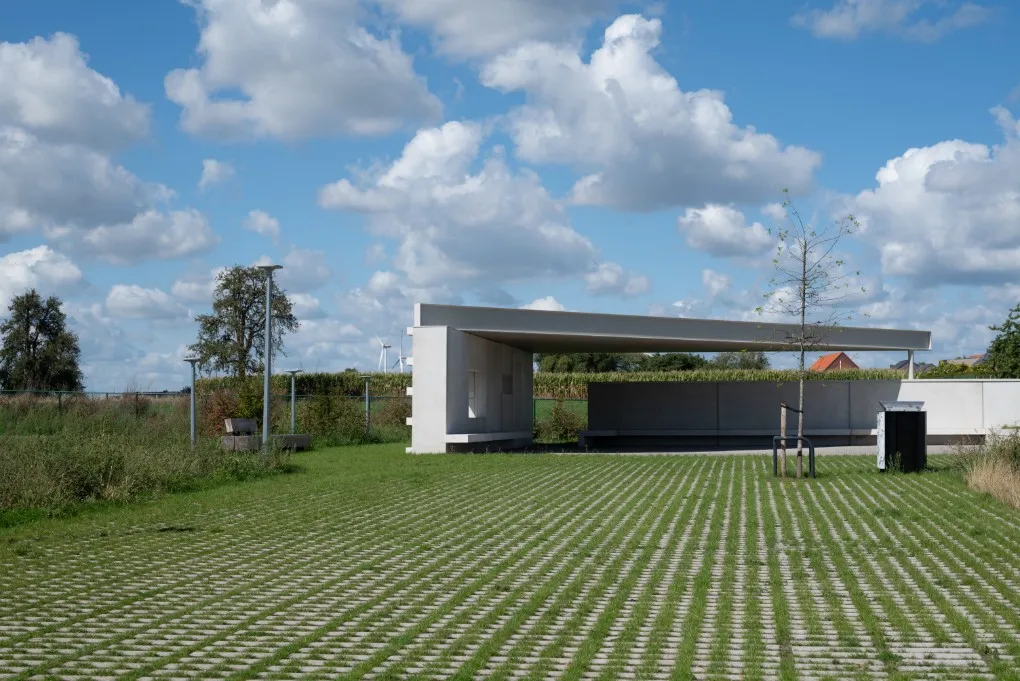
The burial park, spanning 6,609 m², is designed with a park-like atmosphere. Nearly 43 percent of the site consists of lawn, and over 90 trees will be planted. The graves are arranged in seven so-called ‘burial chambers’, which will be developed step-by-step to keep a large part of the terrain green and open. The construction cost amounted to 780,000 euros, excluding the 183,000 euros for archaeological research.
Sustainability played a significant role in the design. Rainwater from the roof and paving is collected in two underground reservoirs and can be reused for the greenery and water points. The paths and parking area are designed to be water-permeable.
Extensive archaeological research prior to the park's construction revealed over 500 traces from various periods, including the Bronze Age, Iron Age, Roman, and medieval periods. Finds such as pottery, old roads, building remains, and carbonized grain indicate that this site has been used by humans for thousands of years.
The new cemetery offers various options for farewells, catering to the growing trend of cremation. There are possibilities for urns, including an urn wall, urn burial, and a scattering meadow, alongside burial vaults and in-ground burial plots. The first burial chamber includes 90 vaults, with expansion possibilities for the future.
Centrally located is an open grass area with benches, intended as a space for reflection. A covered reception area provides shelter during farewell ceremonies. With this new burial park, Riemst aims to create a green, tranquil, and accessible place for personal goodbyes and lasting remembrance of loved ones.