An estimated 10.5 billion euros annually is the cost of physical complaints resulting from repetitive or heavy work in Belgium. MATE Ergonomics, a new spin-off from KU Leuven, addresses this issue with video and sensor technology. This technology objectively maps physical work strain and uses software to visualize how movements, postures, and tasks affect the human body. This allows for accurate prediction of the risk of muscle and joint disorders, preventing costly injuries and absenteeism. MATE aims to become the international standard in work-related ergonomics and has raised €665,000 from LRM, the Gemma Frisius Fund, and several experienced business angels.
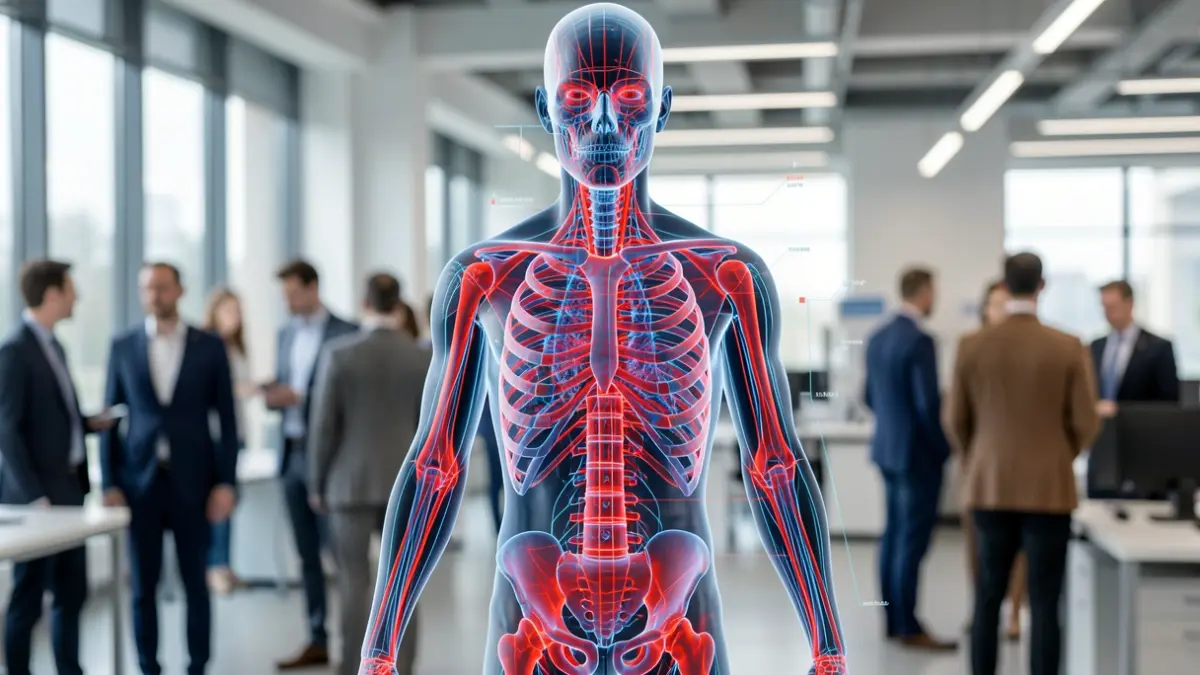
MATE Ergonomics, a spin-off from the research group Biomechanics of Human Movement at KU Leuven, combines the latest insights in biomechanics and ergonomics. Unlike traditional, subjective, and checklist-based tools, MATE starts from objective biomechanical parameters. "The MATE app creates a digital twin based on personal data – such as age, height, and weight – and video footage of the employee in action," explains dr. Arthur van der Have, a former researcher and now CEO and co-founder of the spin-off.
The software simulates external forces encountered by the employee, such as pushing, pulling, and lifting forces. This results in a report with a personal risk assessment. This allows a company's ergonomist to adjust the task package or create a substantiated job rotation schedule. The app claims an accuracy of 77% in risk predictions through this objective approach.
MATE's software translates knowledge about what happens at the cellular and tissue level under strain to the impact on joints and muscles, and subsequently to an individual risk assessment and ergonomic recommendations. "We are moving away from the old idea in ergonomics that certain movements are not allowed," says van der Have. "Our starting point is that an employee can perform all movements, but must vary them smartly so that the total load never becomes too great." Employers across Europe are obligated to assess workplace risks, including ergonomic risks that can lead to injury. However, current methods are often considered outdated, subjective, and only capture a snapshot.
Traditional analyses can only accurately predict whether an employee will develop an injury in 9% of cases. This contributes to the rise in work-related injuries. Recent Belgian figures show that 80% of employees have experienced a musculoskeletal disorder. The cost of such conditions is estimated at €230 billion per year in Europe, with €10.5 billion in Belgium, averaging €1,600 per employee annually.
MATE Ergonomics aims to become the international standard in work-related ergonomics. The company is initially focusing on companies with 250 or more employees in Belgium, Germany, and France, across various sectors including manufacturing and consultancy. Clients include a multinational in the manufacturing industry, the retailer Colruyt Group, and prevention expert Groep IDEWE.
The investment of €665,000 came from, among others, the Limburg investment company LRM, the Gemma Frisius Fund (KU Leuven), KBC Bank, BNP Paribas Fortis, and business angels such as Olivier Georis, Jos Deschagt, and Peter Nijs. The latter will continue to support the start-up during its growth, including guidance on sales and customer conversion.
MATE Ergonomics is a spin-off from the research group Biomechanics of Human Movement at KU Leuven, based on results from professor Ilse Jonkers and former doctoral researchers Arthur van der Have and Bryce Killen. Sam Van Rossom and software engineer Kevin Vandenheede, also a co-founder, made significant contributions.