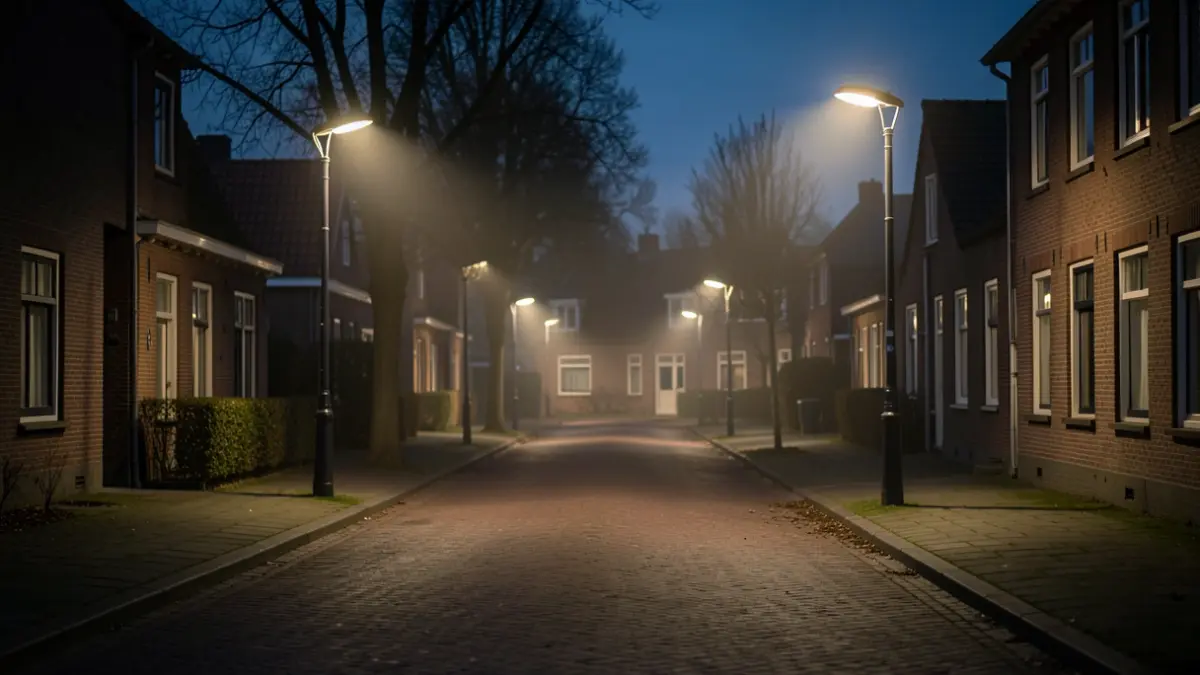
Starting November 17th, street lighting in Schilde will be gradually adjusted to match the location and function of each street. This aims to maintain sufficient light where needed while creating more darkness where possible. The adjustment is being carried out in collaboration with Fluvius.
Each street will receive a tailored lighting program, considering factors such as traffic volume, school zones, hazardous intersections, public squares, and proximity to nature reserves. Busy roads and dangerous intersections will retain adequate lighting, while quieter residential streets and areas near nature reserves will be designed to accommodate the need for darkness. In some locations, amber-colored lighting may be used to minimize disturbance to certain animal species.
The transition to LED lighting, combined with smart control that includes dimming and potentially turning off lights during the quietest hours, will reduce the municipality's energy consumption. This also minimizes light pollution affecting homes and gardens and provides more space for nature, including bats, insects, and birds, by respecting the natural day-night cycle.
Residents may notice that some lights will be less bright or turn off during the quietest hours, while others will remain lit for longer or at a higher level. If a streetlight is not on when it normally should be, it may be part of the new system and not necessarily a defect. Defective lamps can be reported to Fluvius via straatlampen.be, where the programmed lighting settings can also be checked.