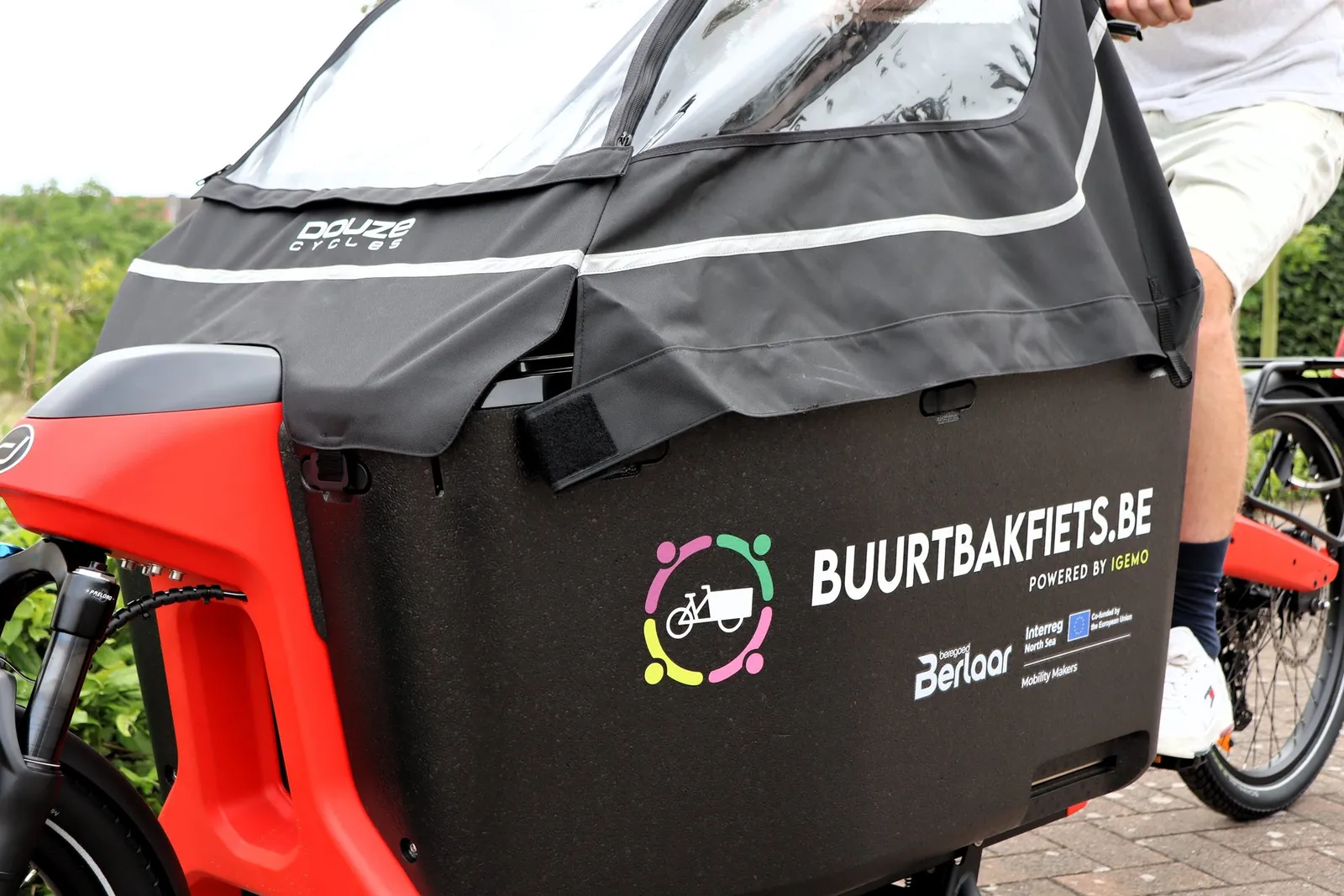
The Buurtbakfiets is part of the Interreg North Sea project Mobility Makers, with IGEMO as the lead partner. The project is 60% funded by Interreg, with the remainder from IGEMO. The bikes are stationed at five fixed locations in different environments: a station, a village centre and a residential area. IGEMO is the owner and manager, while Sentinel provides the smart locks and booking platform. Maintenance is handled by Bike&Co, a network of social economy companies. Neighbourhood coordinators swap batteries and report any issues.
In the Mechelen Transport Region, 58% of trips are made by car, according to the Flemish Travel Behaviour Survey (2023–2024). The Regional Mobility Plan aims to reduce this share to 50% by 2030. Many car trips are short, but the car remains the standard choice because a regular bicycle is insufficient for shopping or transporting children. An electric cargo bike offers a solution, but is often too expensive and stands idle. The free pilot aims to determine if a shared cargo bike is a viable alternative.
Between 1 August and 29 October 2026, 124 residents registered and 61 made at least one trip. Together, they completed 257 rentals covering 3,149 kilometres. A cargo bike goes on its next trip every 18 hours on average, compared to 140 hours for Donkey Republic's paid shared bikes in comparable areas. A survey in September 2026 showed that two out of three users would have made their trip differently by car, and 70% used the car less. The bike appeals especially to young women with small children and older men.
“"The key question is not whether people want to try a cargo bike, but whether they use it frequently and purposefully enough to justify the costs and management."
Beyond the figures, there are social stories. In Rijmenam, a neighbourhood coordinator and a regular user got to know each other through the bike. A sixty-year-old without a car was able to visit his elderly mother thanks to the cargo bike. Despite the bikes being left unattended on the street, there has been no vandalism. The pilot makes IGEMO a more significant player in the Flemish shared mobility landscape, and the experiences have been incorporated into a guide by Way To Go on shared cargo bikes.
Not everything went smoothly: the locks and app had teething problems, and for residents with limited digital skills, an app remains a barrier. IGEMO therefore works with the Digipunten in municipal libraries. Based on the results, IGEMO will discuss with the three municipalities whether the service can continue after the pilot. The 2027–2029 Action Programme of the regional mobility partnership is already looking further: if the evaluation is positive, a regional offer of shared cargo bikes will follow.