The number of shared bike rentals in the Mechelen Transport Region between January and September 2026 increased by 48% compared to the same period in 2025. Each month this year showed higher growth, ranging from 31% to 64%. This growth is not seasonal; even in January, rentals rose by 55%.
The growth is not due to a larger fleet. In September 2026, the fleet consisted of 526 bikes, the same as in 2024. However, each bike was rented an average of 11.8 times in September 2026, compared to 5.1 times two years prior. The hub network grew slightly from 133 to 137, coinciding with a 58% increase in rentals.
Bike sharing is no longer limited to urban centers. Outside Mechelen and Willebroek, 22,340 rentals took place, more than one in five. Duffel shows high usage with 5,074 rentals, and the station hubs of Bornem and Puurs are among the most used hubs in the region.
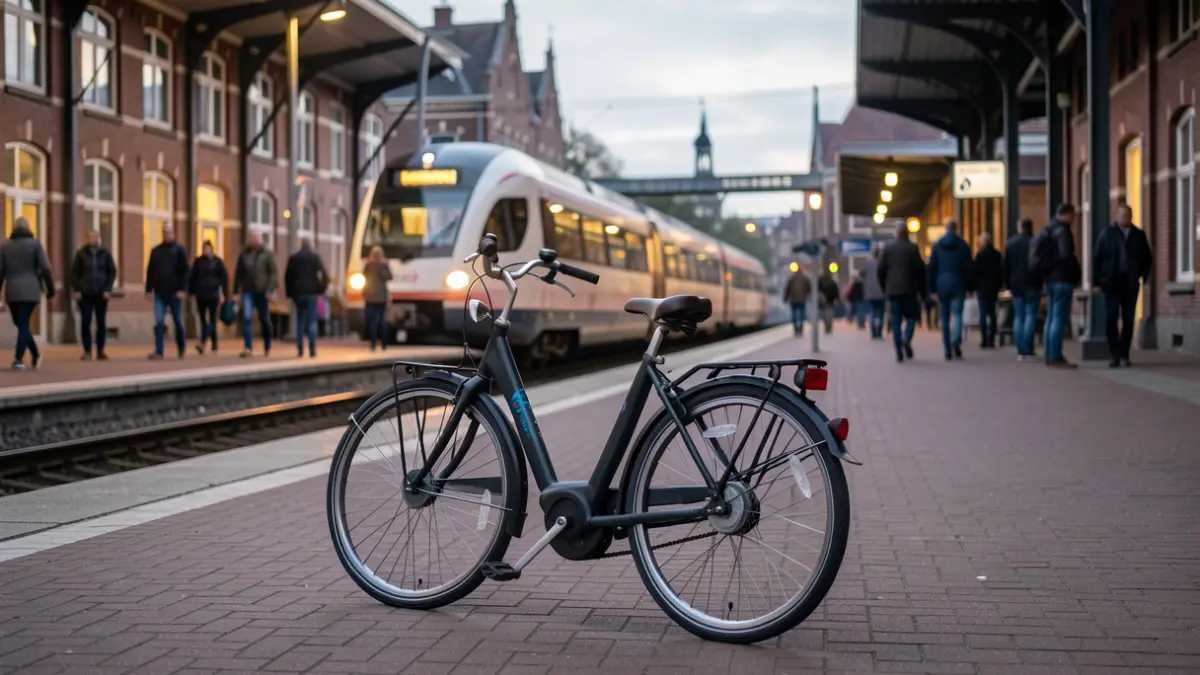
Outside cities, 53% of rentals start at a train station, suggesting shared bikes often function as 'commuter bikes' to bridge the distance between home and the platform. Even within the urban districts of Mechelen and Willebroek, there is significant usage outside the centers, with 8,597 rentals in village cores like Battel.
Although rural hubs are used less intensively than urban ones, their rental numbers are also growing. In the last month, there were approximately 1,300 rentals outside the cities, compared to an average of 800 per month since the start.
The shared bikes offer a solution when public transport is not running. 7.4% of all rentals start between midnight and six in the morning, more than during the busiest morning hour. This provides an affordable alternative for night shift workers.
The shared bike system is seen as a complement to public transport, not a competitor. It enhances the usability of trains and buses by bridging the 'last mile,' especially from villages to stations. The system is more flexible than bus lines and can be quickly adapted to new needs, such as connecting Business Park E19.
The entire shared bike network, with 137 hubs in twelve municipalities, costs approximately the same as one bus line. Since its launch in June 2024, 101,509 rentals have been recorded. Efficiency is increasing, as the same bikes now generate more than twice the number of rides compared to two years ago.
The figures indicate that continuing the shared bike system strengthens public transport by providing connections between villages and stations, and serving as an alternative for night travel.