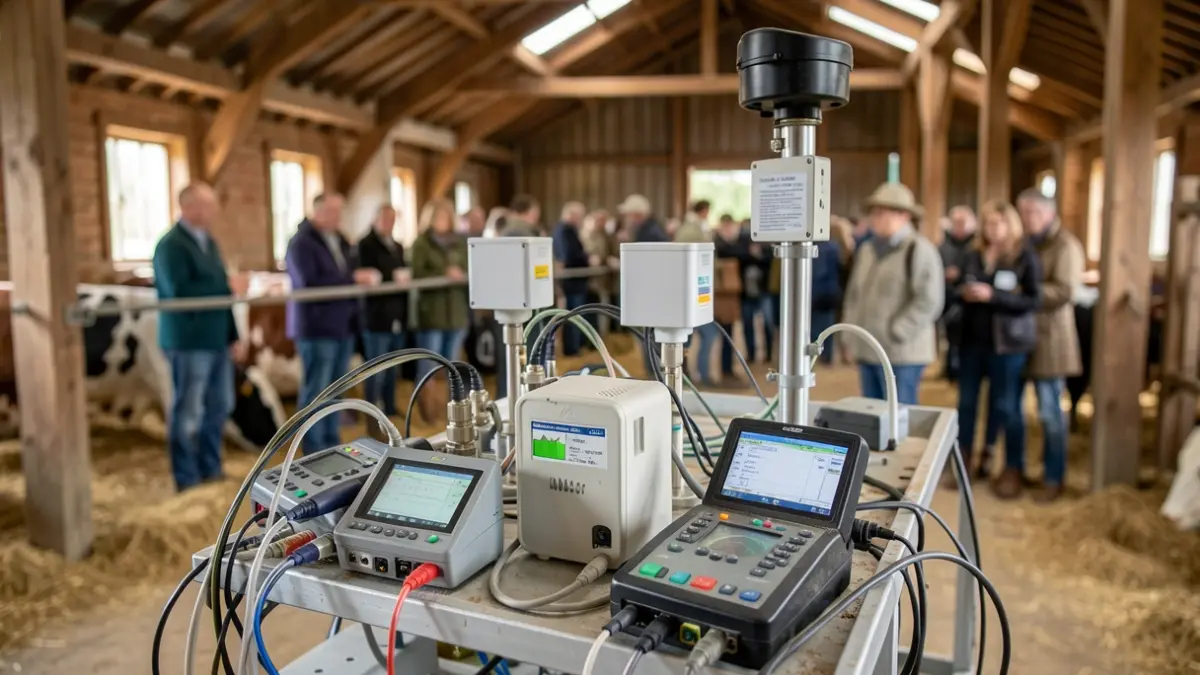
As part of the 'Methane and ammonia – development of stable emission measurement methods' program, funded by the Ministry LVVN, ILVO, WLR, and TNO conducted measurements on four naturally ventilated Flemish cubicle stables between 2022 and 2024. The central question was the extent to which the applied measurement methods yield comparable results for determining emissions.
The report details results from simultaneous measurements aimed at determining and explaining differences between methods for concentration, flow rate, and emission measurements. The study emphasizes that choices in calibration, execution of the standard reference method, sampling strategy, and model usage greatly influence the final emission results.
Standardization and transparency are crucial for improving the comparability of measurements. Recommendations include better alignment of calibration and quality procedures, harmonization of standard reference methods for ammonia, further investigation into continuous incoming air measurements, and standardization of minimal CO₂ differences in the TGR method.
The remote sensing method requires further development to reliably distinguish sources in environments with multiple emission points.