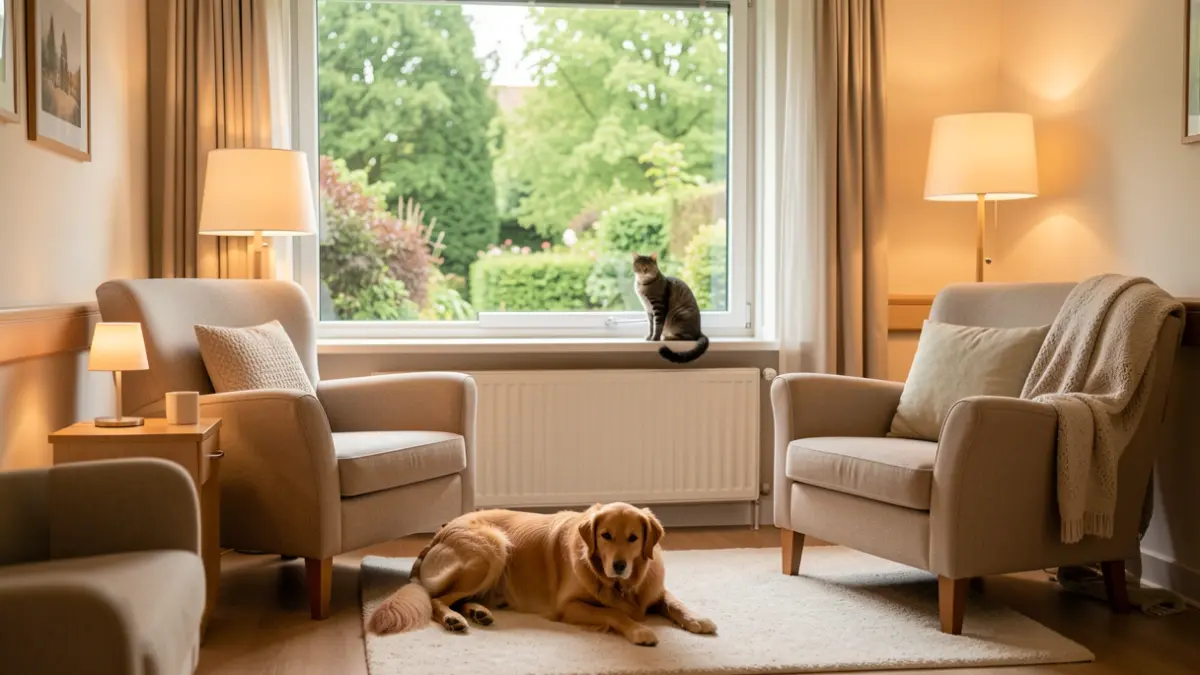
Hospitalization can be an intense and emotional period, often leading patients to miss contact with their beloved pets. Through the 'Knuffelpootjes' initiative, the UZA aims to change this. The new Garden Room offers patients, both young and old, the opportunity to see their dog or cat in a warm and safe environment on the hospital campus.
Prof. dr. Guy Hans, CEO of the UZA and chairman of UZAfoundation, highlighted the project's significance: "With 'Knuffelpootjes', we bring a piece of home into the hospital. The idea originated from a donor who personally experienced the positive effect of animal proximity. Thanks to this support, patients can reunite with their pets."
During the pilot phase, patients from the Queen Mathilde Mother and Child Centre and the oncology department can utilize the Garden Room. Subsequently, the room will be opened to all patients staying in the hospital for seven days or longer. A family member or loved one will bring the pet, and about ten UZA volunteers will help organize and supervise the visits.
The use of animals in therapeutic settings, including nursing homes and hospitals, has been on the rise for the past two decades. Contact with animals can enhance emotional well-being, provide social support, help manage anxiety and negative feelings, and stimulate the production of oxytocin, the 'happiness hormone'. Prof. dr. Stijn Verhulst, head of pediatrics, emphasizes its importance for children: "The bond between humans and animals positively influences patient well-being and recovery. Pets offer comfort and emotional support that children particularly need."
The need is also significant in the oncology department, where patients often have prolonged stays. Kristin Slabbaert, head nurse for oncology, shares: "Occasionally, we arranged for a cat or dog to visit by the window. It's heartwarming to see how patients enjoy these moments. It gives them something to look forward to and helps them momentarily set their illness aside."
For patients in the end-of-life phase, spending time with their pet is valuable. The structural offering of such care represents a significant step in the UZA's comprehensive patient support.
Marco, a pet lover, and his dog Amélie were among the first visitors. Marco recounted his experience: "During my long hospital stay last year, I greatly missed my two dogs. Being able to see and cuddle them would have meant so much. Realizing my dogs barely recognized me upon my return highlighted how crucial it is to maintain contact with pets."
The Garden Room aligns with the UZA's ambition to further centralize the patient experience through initiatives promoting human-centered care. The 'Knuffelpootjes' project was recently selected as a beneficiary for 'De Warmste Week'.
The scientific evidence regarding human-animal interaction is partly based on recent research by Joni Delanoeije, a postdoctoral researcher affiliated with KU Leuven.