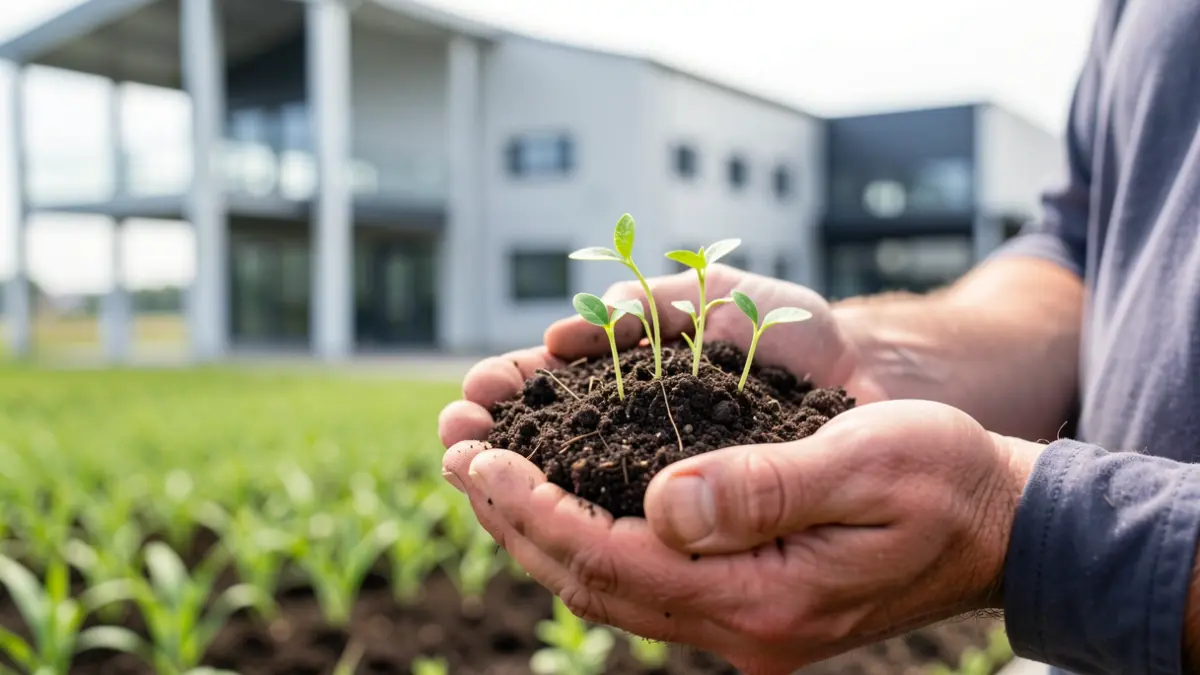
During a 'Herfstapéro' on Wednesday, September 30, held in the new barn of Hooibeekhoeve, the Province's Agricultural Department, Hooibeekhoeve, and Proefbedrijf Pluimveehouderij introduced the updated Landbouwkompas. The event provided insights into feasible techniques for emission reduction in livestock farming and served as a networking opportunity amidst the machinery park.
The Landbouwkompas maps the opportunities of a specific location, aiding farmers with future plans, investments, or transitions. It consolidates information from various data sources to explore development potential and support informed choices for the (re)development of agricultural businesses or existing infrastructure.
Local authorities receive potential policy actions per theme. Deputy for Agriculture Jinnih Beels emphasized the importance of preserving suitable agricultural sites and providing concrete information to farmers and authorities.
Besides space, sustainability is a challenge, particularly reducing ammonia emissions. Hooibeekhoeve and Proefbedrijf Pluimveehouderij are researching practical solutions. Projects like Interreg VL – NL RAMBO have shown that acidified litter can reduce ammonia emissions in broilers by 80-90%, and flax powder by approximately 20%.
For laying hens, more frequent manure removal proved effective, with a 65% decrease in ammonia emissions when belts were cleared three times a week instead of once. Further research is needed on the long-term effects of acidified litter for laying hens. The current project PAS Rammonia focuses on ammonia emissions at stable level for pigs, chickens, and dairy cattle, while other projects investigate field emissions.
The researched techniques are intended to eventually be included in the official list of ammonia emission-reducing measures. Beyond emissions, the centers also investigate animal health, welfare, energy, water, and digitalization.
Deputy Jinnih Beels stated that farmers need affordable and feasible techniques to reduce emissions. The practical centers aim to lead by developing and testing new solutions, making Antwerp a leading region for practical research.