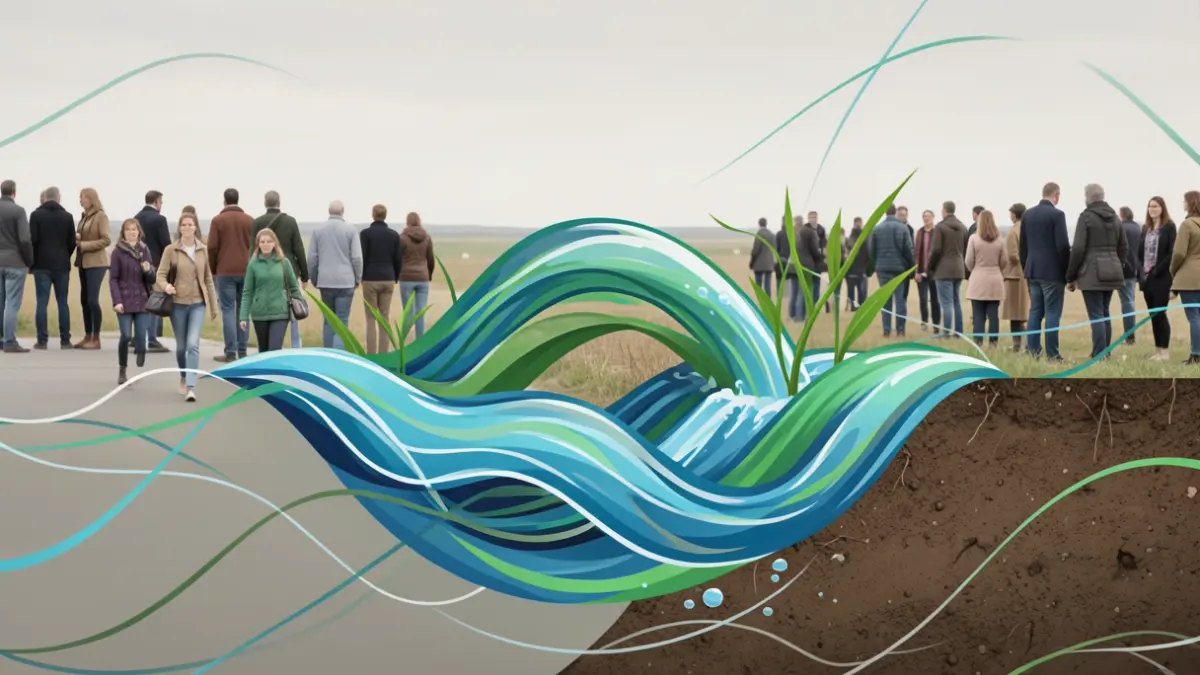
Flanders is increasingly facing periods of drought and heavy rainfall. Climate scenarios predict an increase in drought stress on agricultural land and a higher risk of flooding. The quality of water, soil, and nature is under pressure. The Local Blue Deals bring together local authorities, land managers, and other partners to tackle these challenges by creating 'sponge landscapes' that better retain, infiltrate, and slowly release water.
Out of 45 applications, 25 Local Blue Deals were selected, involving over 200 partners. The selection was based on the quality of the application, the strength of local cooperation, and the intended impact on water resilience and quality. The selected coalitions will receive 3.5 million euros this year for their launch and will translate their ambitions into concrete measures.
Five areas will take the lead as frontrunners: the Voerstreek, the IJzer- and Handzamevallei, Waterbatterij Brabantse Wouden, Herk en Mombeek, and Sponsland Groene Noordrand. These will collaborate with the Flemish government for eight years on ambitious plans covering waterlogging, water supply, water quality, biodiversity, protection of water sources, climate adaptation, and how residents can experience water and the landscape.
The remaining twenty selected coalitions will act as candidate frontrunners, developing an action plan for four years. They too will bring local partners together to link water measures with opportunities for sustainable agriculture and biodiversity. Coalitions not selected this time can participate in knowledge exchange and will be supported by the Steunpunt Lokale Blue Deals. A second call is planned for 2028.
The Local Blue Deals build on previous programs and aim to translate cooperation into visible interventions on the ground. From retaining water longer to improving the quality of streams and rivers, many local measures together should better prepare Flanders for a changing climate.