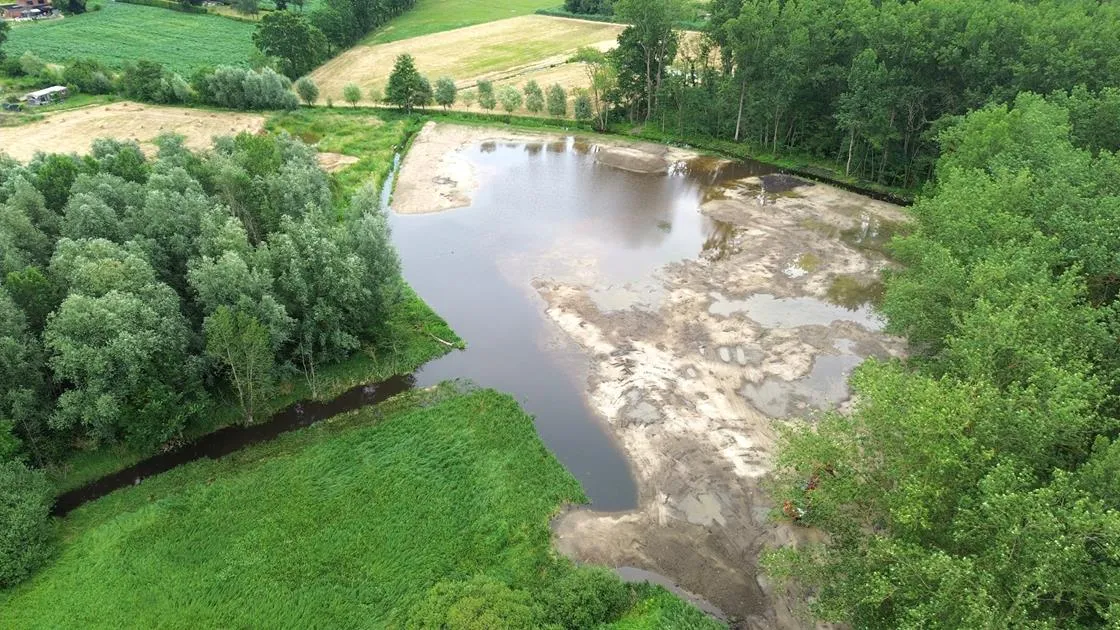
Until the mid-1990s, the Springbos was a natural flood plain. Subsequently, the marsh was excavated for a water reservoir and a fishing pond, leading to reduced water capacity, flooding, drought, and loss of nature. The project ‘Restoration of the Springbos in the Goorbosbeekvallei’, selected as a Blue Deal project in 2020, is reversing this situation.
Following the preparatory phase, including land acquisitions, a solution for the fishing club, and the necessary permits, the development works began on March 27, 2026. The high hedges that retained water have been removed, and the fishing pond has been largely filled in. Approximately 5,000 tons of debris were removed from the former marsh, with usable soil sieved and reused, and polluted sludge cleared.
The trees removed during the works have been compensated generously with the planting of over 1,500 trees and shrubs, with more than 1,000 to be added after the works.
The initial results are promising. During the heavy rainfall in June 2026, water flowed directly into the Springbos via a new inflow opening. Even after the dry summer, water remained in September. The restored sponge function allows for at least 50 tons of additional CO2 storage annually.
Nature is responding quickly: Water violet and marsh cinquefoil have returned, the rare marsh fern was found on the old marsh bed, and the great crested newt is gaining more habitat.
The restoration project was realized through collaboration between Duffel, Sint-Katelijne-Waver, Natuurpunt Oude Spoorweg, and ORIOM, with contributions from various companies and support from the Department of Environment via the Blue Deal.