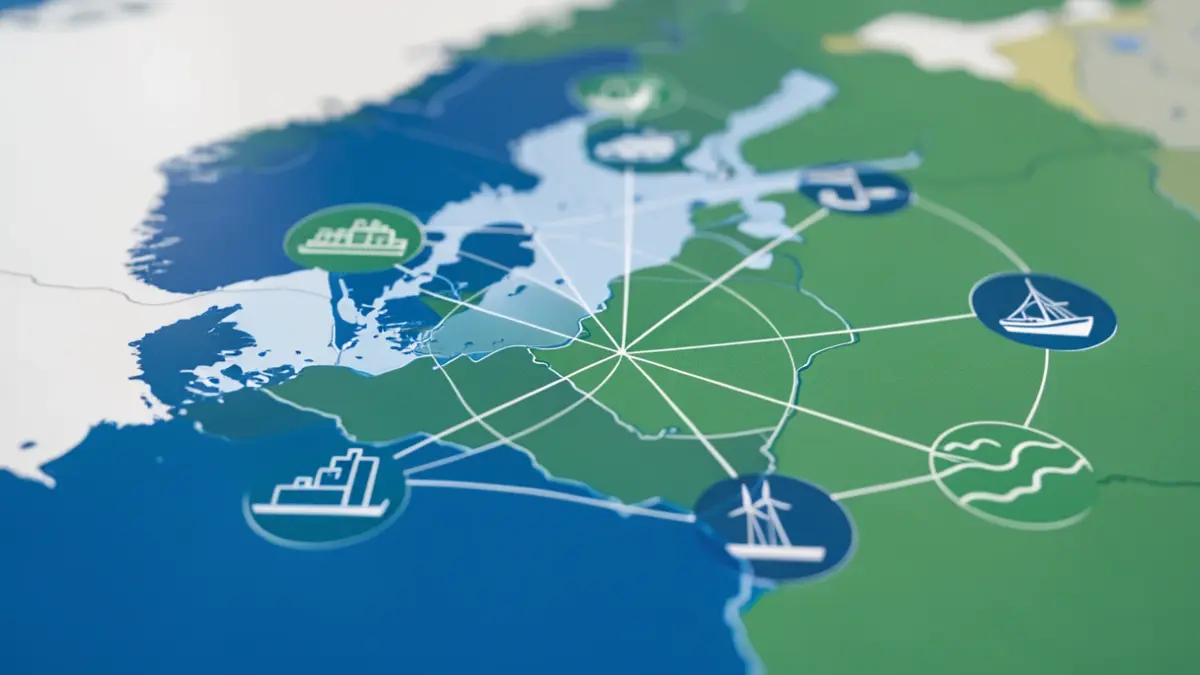
The North Sea is a hub for numerous interests and activities, including shipping, offshore energy, and nature conservation. The NESBp project is working to establish better agreements between sectors and countries bordering the North Sea and the Baltic Sea. Key themes include cross-border cooperation, nature restoration, maritime security, and improved data sharing and utilization.
A new policy brief compiles the initial lessons learned from international cooperation and offers recommendations for better aligning maritime spatial planning. These insights were shared in September with the North Sea MSP Collaboration Group. Furthermore, NESBp analyzed how nature conservation and restoration are currently incorporated into maritime spatial plans for the North Sea and Baltic Sea, aiming to enhance nature integration in future sea space planning and use.
Effective planning relies on accurate information. Experts convened in Brussels to explore how marine data from EMODnet can be better utilized for maritime spatial planning. A second workshop delved into maritime security, providing input for the new methodology behind the NaviSafe tool. The cumulative impact of various maritime activities was also discussed at a workshop in Hamburg, which proposed the establishment of a Community of Practice for ongoing knowledge exchange among governments, scientists, and policy advisors.
The NESBp project is entering its final months. New policy briefs and project results are forthcoming, covering topics such as cross-border management of maritime spatial planning and the management of Mariparks. Efforts are also underway to make data and knowledge more accessible and comparable between countries. The project's final conference will take place on April 21 and 22, 2027, to consolidate key insights and results. An official invitation will follow later.