The LIFE DUNIAS project aims to revive indigenous species in the dunes by removing invasive plants. These non-native species disrupt the dune ecosystem and displace valuable local flora.
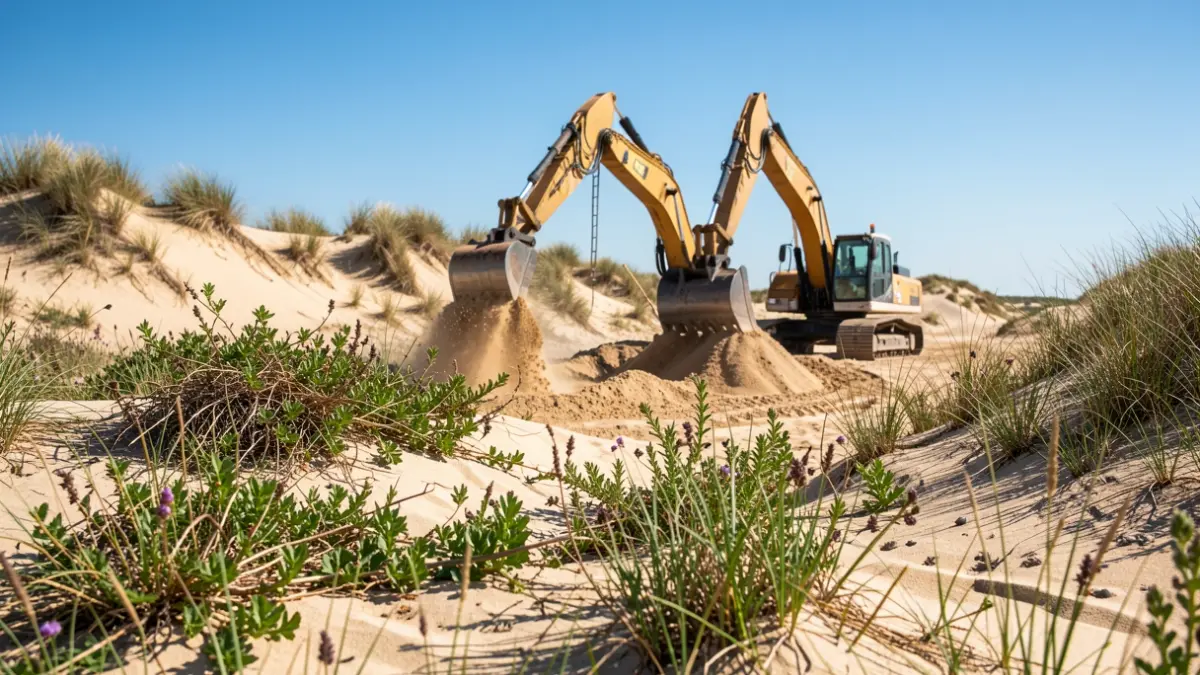
The restoration process involves excavating sand up to 1 meter deep with a crane, followed by sifting the sand to reinstate the original dune profile. The removed invasive plants, including roots, are transported for composting. Natural vegetation is expected to recover spontaneously after the work, with follow-up care planned one year later.
This autumn, work will take place in Bredene at several locations, including park areas south of the Koninklijke baan. Specifically, this covers the narrow zone from the Danckaertstraat parking, ’t Paelsteenveld, and the area from the intersection of Driftweg and Zeelaan up to the border with Oostende. Paths may be temporarily inaccessible, and there may be minor disruptions from construction traffic and potential noise.
The main mechanical works in these areas are scheduled to last until December 2026. Along the Koninklijke baan, light traffic disruptions may occur for a few days during spring and summer due to mowing and subsequent chemical treatments.
The contractor requests that the signage be respected and the construction site not be entered.