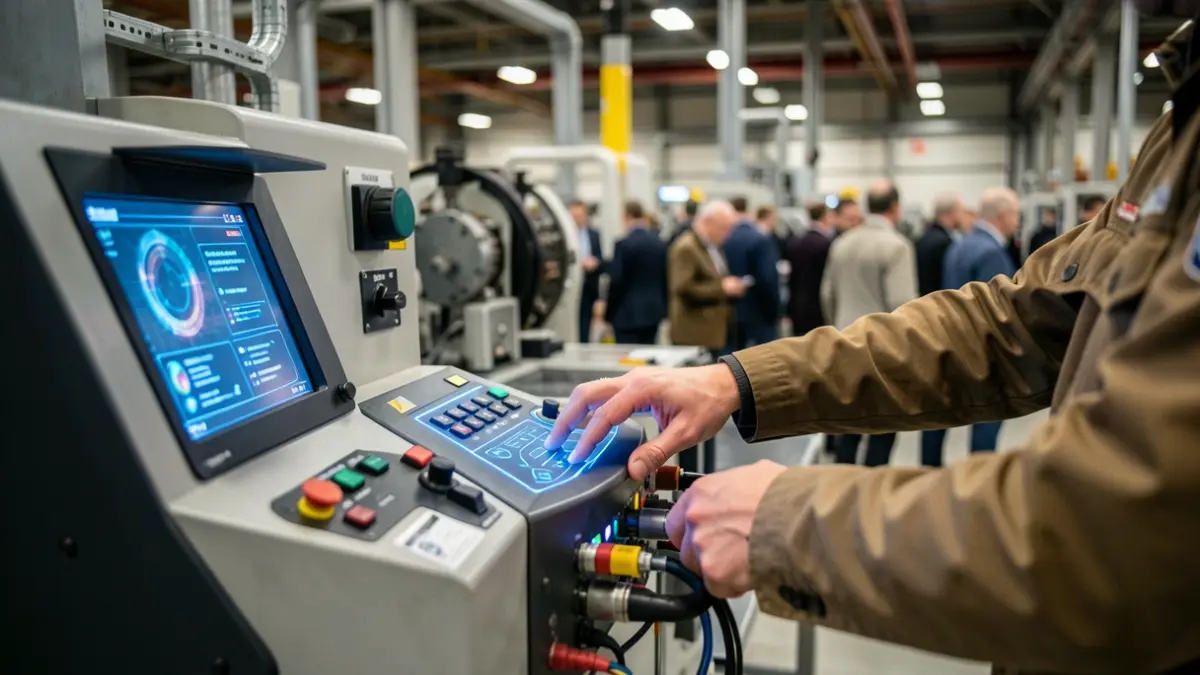
New technologies like robots and artificial intelligence are often presented as solutions for the challenges facing Belgian industry, promising increased productivity, lighter workloads, and enhanced competitiveness. However, a study by the Centre for Sociological Research at KU Leuven, based on a survey of over 2,800 employees in the metal and textile sectors, confirms that while technology makes employees more productive, it simultaneously leads to greater work pressure, stress, and inequality.
Many employees find that technology improves their work but not necessarily makes it more pleasant. They report higher workloads, increased stress, greater complexity, and a larger number of tasks. Digital support systems, such as information and communication systems, are frequently associated with a higher burden. According to researcher Yennef Vereycken, technology is not inherently good or bad; its design and implementation determine whether it truly supports work or increases pressure.
A notable finding is the 'privacy paradox'. While only 30% of employees indicate they can access their personal data and 25% know what their employer does with collected data, 90% believe their privacy is respected. This lack of clarity regarding data collection and usage contrasts sharply with the high level of trust.
The consequences of technological changes are not evenly distributed. Higher-educated employees, white-collar workers, and managers more often experience technology as supportive and are better informed about their data. Conversely, lower-educated workers and manual laborers more frequently report increased workload, stress, and complexity. These groups also have more personal data collected and are less informed about their rights. Professor of sociology Valeria Pulignano emphasizes that this technological transition has unequal impacts and that the disparity in experiences warrants attention.
There is also a lack of democratic control over these changes. Approximately 70% of employees report being rarely or never involved in the planning and implementation of new technologies. Employees who are involved systematically report lower workloads and stress, suggesting that technology presents not only a technical but also a democratic challenge.
ACV-CSC METEA, which co-funded the research, stresses that the introduction of technology in the workplace must be part of social dialogue. Lieve De Preter, Chair of ACV-CSC METEA, states that employees and their representatives must be involved from the outset of the process, including training, workability, and job implications.
Notably, the surveyed employees do not anticipate massive job losses due to the rise of new technology and artificial intelligence. While 40% expect a decrease in jobs, an equal percentage expects no change or even an increase.
The study, funded by KU Leuven, involved over 2,800 employees through a survey distributed to members of ACV-CSC METEA. The analyses and conclusions were conducted independently by researchers from KU Leuven.