The Cancer Research Institute Ghent (CRIG) is celebrating its tenth anniversary this month. What began in 2016 as an initiative to better connect fragmented cancer research has grown into a strong network of over 700 researchers from UGent, UZ Gent, and VIB.
With partnerships and investments in 18 dual projects and 105 projects for young researchers, CRIG has achieved significant leverage for faster and more efficient cancer research, leading to new treatments and technologies. The results translate into over 3,000 publications, collaborations with industry, 40 patent families, and 8 launched spin-off companies.
With partnerships and investments in 18 dual projects and 105 projects for young researchers, CRIG has achieved significant leverage for faster and more efficient cancer research, leading to new treatments and technologies. The results translate into over 3,000 publications, collaborations with industry, 40 patent families, and 8 launched spin-off companies.
“"We give researchers the opportunity to start innovative research today that can result in concrete treatments for people with cancer tomorrow."
CRIG was founded in October 2016 to stimulate and accelerate cancer research in Ghent. It now unites over 700 researchers from UZ Gent, UGent, and VIB, along with more than 80 research groups, each dedicated to their own discipline. From there, CRIG also facilitates collaborations with other research institutes, foundations, and companies.
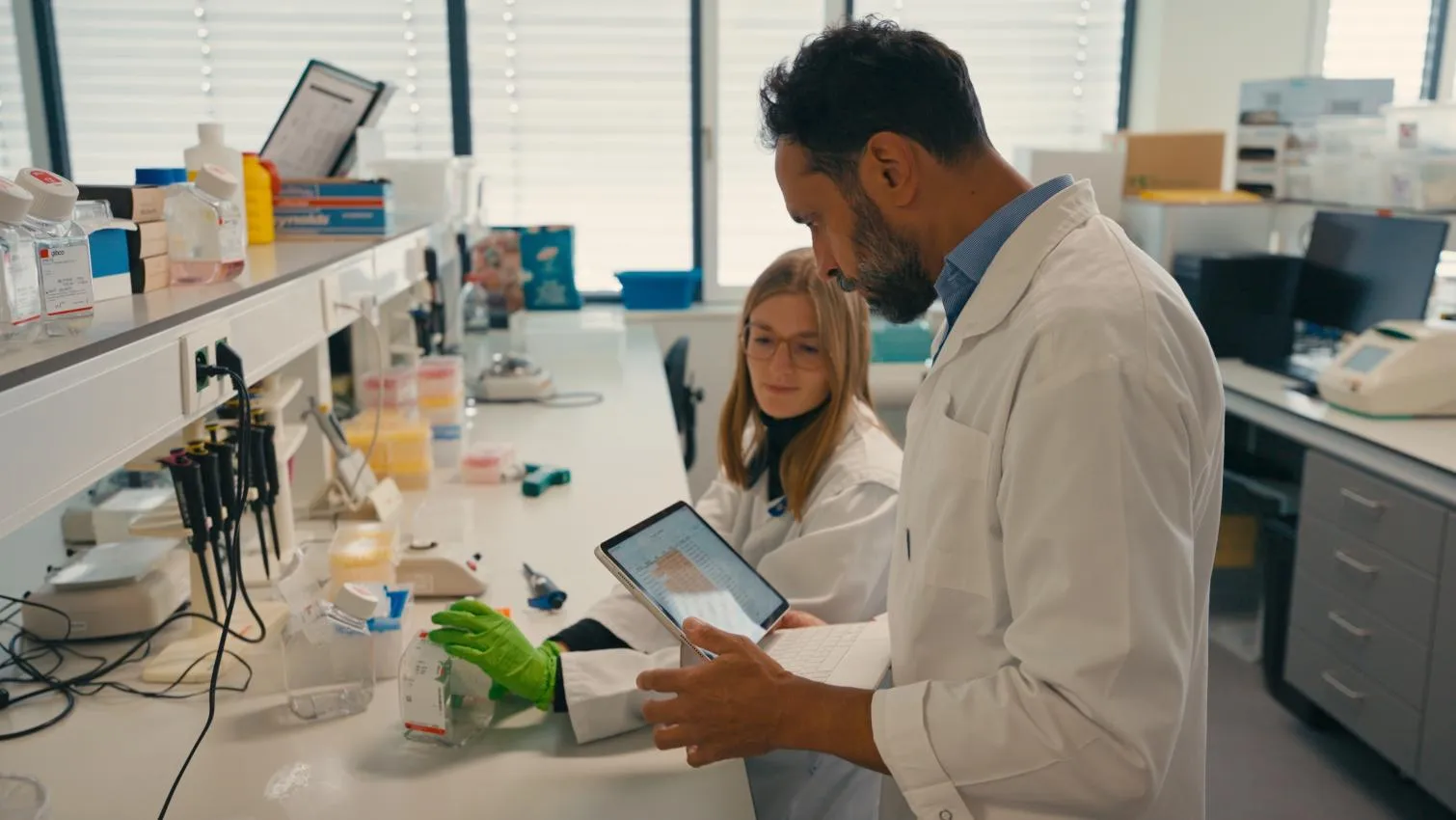
‘Each of us strives for breakthroughs in the fight against cancer,’ says Prof. Vermaelen. ‘To achieve this, we bring together various experts such as doctors, biomedical scientists, lab technicians, bio-informaticians, and engineers, and we support their research. Some research is conducted in the lab to better understand cancer cells, while other research takes the step towards the patient, developing new or adapted treatments.’
‘Each of us strives for breakthroughs in the fight against cancer,’ says Prof. Vermaelen. ‘To achieve this, we bring together various experts such as doctors, biomedical scientists, lab technicians, bio-informaticians, and engineers, and we support their research. Some research is conducted in the lab to better understand cancer cells, while other research takes the step towards the patient, developing new or adapted treatments.’
Over the past 10 years, CRIG has been able to systematically invest in research thanks to income from donations, campaigns, legacies, and partnerships. This budget has primarily gone towards grants for young researchers (1.5 million euros) and collaborative projects between a basic researcher and a physician-researcher (750,000 euros).
‘Young researchers can apply for a start-up budget for innovative ideas in cancer research,’ explains Dr. Pieter Rondou, CRIG coordinator. ‘It is difficult for young researchers to find funding, especially when their research is still in its early stages. With this support, they can achieve valuable initial results to subsequently apply for larger grants or subsidies.’
Additionally, pairs of a basic researcher and a physician can apply for a partnership grant to strengthen collaboration between the lab and clinical care. Needs and questions from clinical practice inform lab research, where researchers develop new insights that can later find their way back to innovative patient care.
The leverage effect of CRIG's seed funding is substantial. Numerous young researchers, after obtaining valuable initial results, secured external grants for their follow-up research, totaling an additional 7.5 million euros in funding – five times the initial basis provided by CRIG.
Furthermore, CRIG supports researchers in translating scientific discoveries into concrete applications by building bridges with companies and funds.
‘This collaboration pays off,’ concludes Prof. Vermaelen. ‘In ten years, our researchers have received over 50 million euros in external funding, we have filed more than 40 patent families, and we have launched 8 spin-offs. This way, innovations extend beyond the lab, and we can contribute to concrete treatments and applications for people with cancer.’