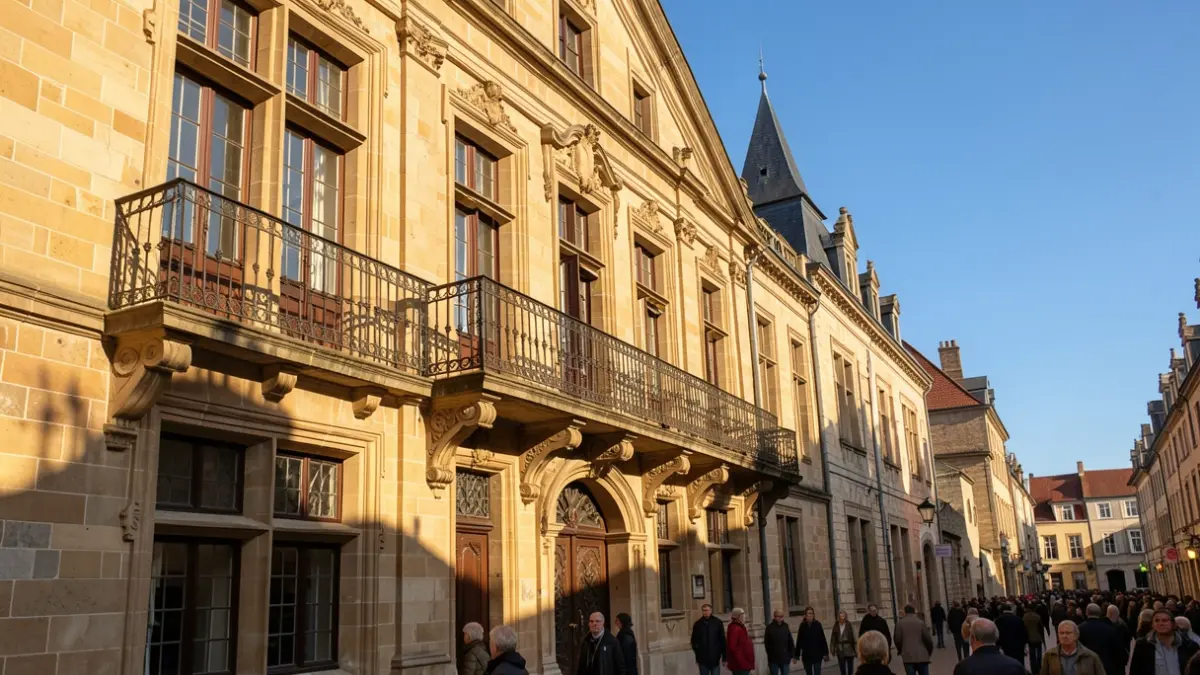

Construction has commenced today on a renovated playground and community garden located at the Vest. This development represents a new phase in the realization of the Vestenpark, a green belt encircling Herentals, designed to highlight the historical ramparts of the Kempen's former capital. The street name Vest itself also references these former city walls. The construction work is expected to take approximately two months.
The playground area will become more attractive and greener, featuring new play equipment such as a crawl tunnel, a hammock, and a merry-go-round. The design will ensure accessibility for wheelchair users. Paving at the edges will be replaced with greenery, and a new bench will be installed along the street.
The community garden will be established where the current garage boxes are located. With fruit trees, berry bushes, planting boxes, and benches, it is intended to serve as a pick-your-own garden and an additional meeting place for the neighborhood. This project reintroduces green spaces into the city, with tall trees providing ventilation, shade, and increased biodiversity. Reduced paving allows for water infiltration and offers cooling on warm days. The total cost of the project is 340,000 euros, with co-financing from the European Union.
Herentals was once the capital of the Kempen, strategically located along important trade routes. The city was defended by a defensive wall that evolved over time. Initially an earthen wall with six stone gates and a moat, it was fortified with ramparts and city gates from the fourteenth century onwards. During the Eighty Years' War, the fortifications were further expanded. After the Middle Ages, nine bastions with four gates were added, of which the Bovenpoort and Zandpoort still exist.
From the late eighteenth century, the defensive wall lost its military function. Ramparts were planted, moats were filled in, and parts of the walls were sold. The section between the Bovenpoort and the Molenvest was parceled out for workers' housing in the early twentieth century, meaning the houses along the Vest are literally built on the old city ramparts.