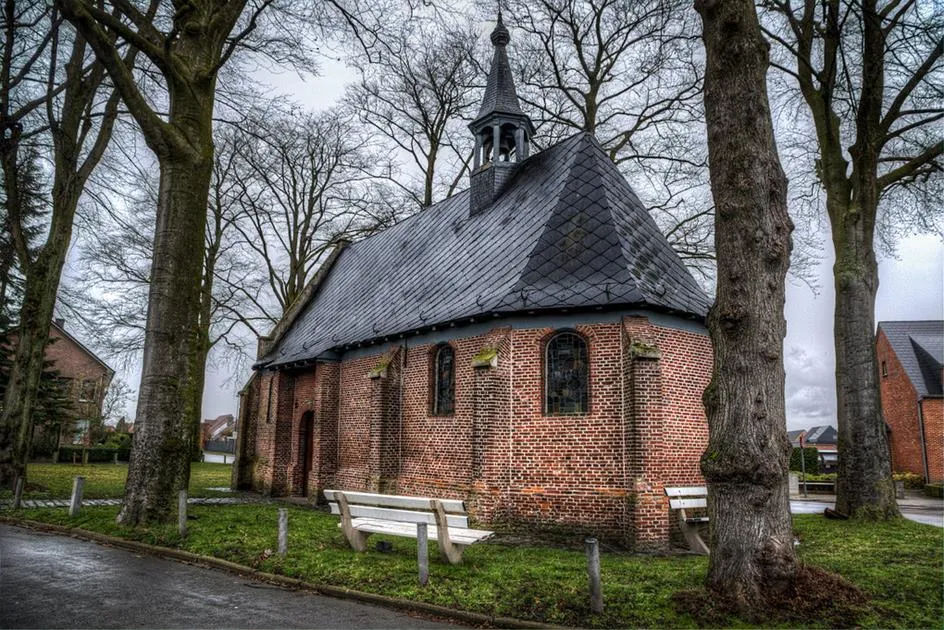
The works focus on the ground around the site. Currently, the chapel is lower than the surrounding ground, causing rainwater to flow directly to the chapel instead of to the trees that need the water. A contractor will install a new drainage system that diverts the water to the planting around the chapel. In the process, a large part of the grass will be carefully dug up and replaced with a flower meadow and perennial plants. This is intended to protect the roots of the trees.
The works will last several weeks, although weather and technical conditions may change the schedule. The city wants to lay a healthy foundation with these measures so that the trees can remain. These contribute to the character of the place. The city is preserving this piece of heritage, both the site and the surrounding greenery, so that the chapel remains a place where pilgrims, walkers, and anyone wanting a moment of rest are welcome.
The chapel on Groenenheuvel is an important place in the Dimpna history of Geel. According to tradition, pilgrims from Xanten in the 10th century stole the sarcophagi of Gerebernus and Dimpna, but left them on Groenenheuvel when the people of Geel pursued them. They were able to take the bones of Gerebernus, but those of Dimpna had to be left behind.
In the future, the city also has the ambition to restore the chapel itself. Concrete plans still need to be made for this. That Geel cares for its chapels was already proven earlier in Elsum. The Saint Dimpna Chapel there was restored in 2021. Since September, the brass section class of the municipal music academy has taken up residence in the chapel. They organise lessons and small concerts there.